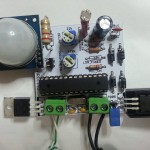
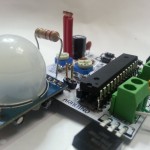
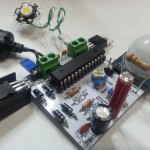
Arduino Development Board

ArDev completed

Recently I decided to try my hand at building another PCB. This time i wanted an arduino atmega 328 board that i can conceivably use in any situation.

It started off with the idea of being just a microcontroller, its crystal, and all the pins broken out into headers.

A poor mans arduino without all the extras, saving on costs, when i just needed to do a simple task.

What i ended up with was a lot more than that..

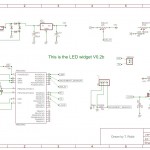
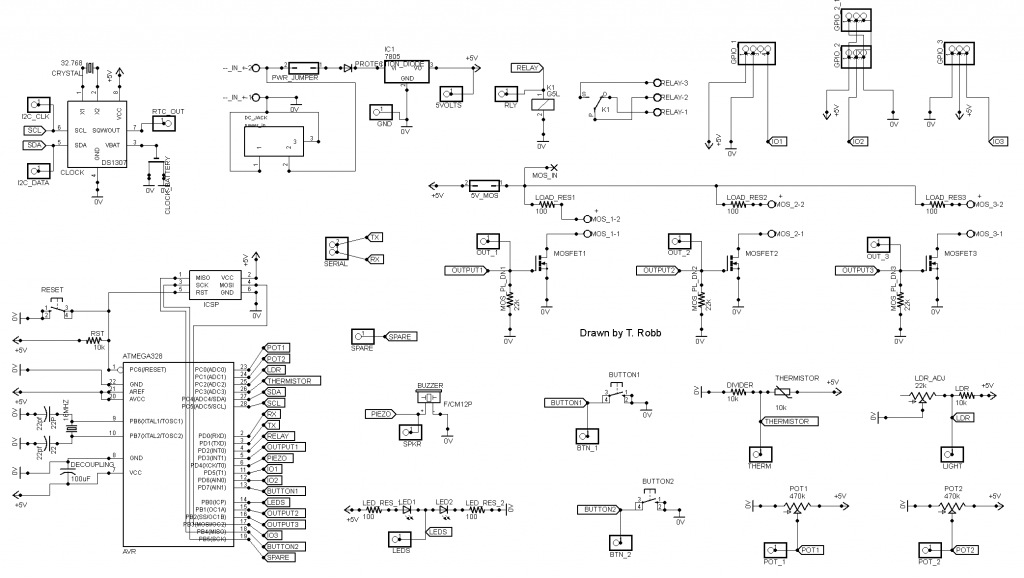
Arduino DevBoard Schematic croppedAt first I just layed out the Atmega with its crystal and 2 caps. Then i thought I may as well add a voltage regulator and power cap as well.

Then I began to squeeze extras into the leftover board space. Before I knew it I had decided to create a board that had room for lots of peripherals but I wouldn’t necessarily populate the whole board if I didn’t need that function.

I had to choose what items to include and which were the best pins for them. I chose based on sensors and peripherals i had used and was comfortable with.

Some pins are fixed such as the I2C bus, the serial pins and the programming pins. The PWM pins I kept for the mosfets, and the analog pins for the sensors.

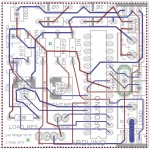
board

I tried to cram as much into the board as I could,trying to organize it into a usable pattern, while keeping everything as close as I dared. Somethings needed to be on the edge to be usable, and some things need to be reachable to the touch. In the end I did what I could and hoped it would be a useful PCB!

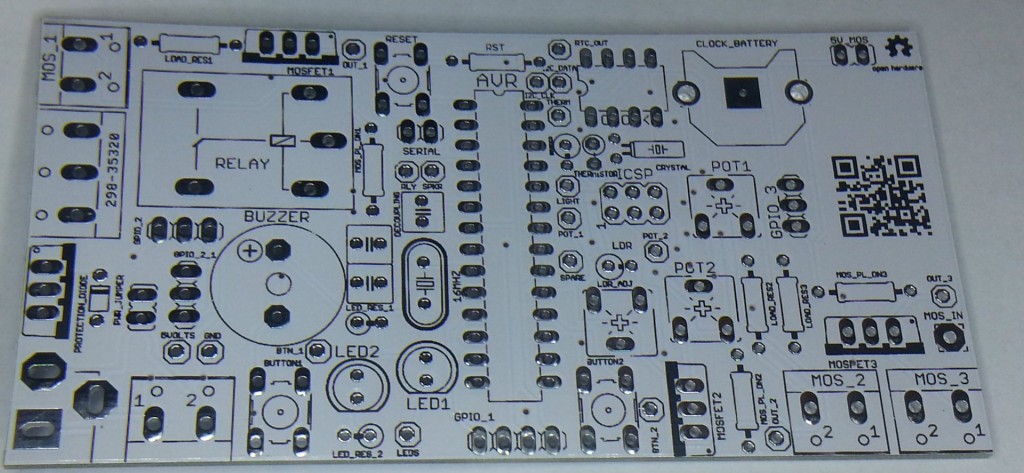
The board contains the following features!!

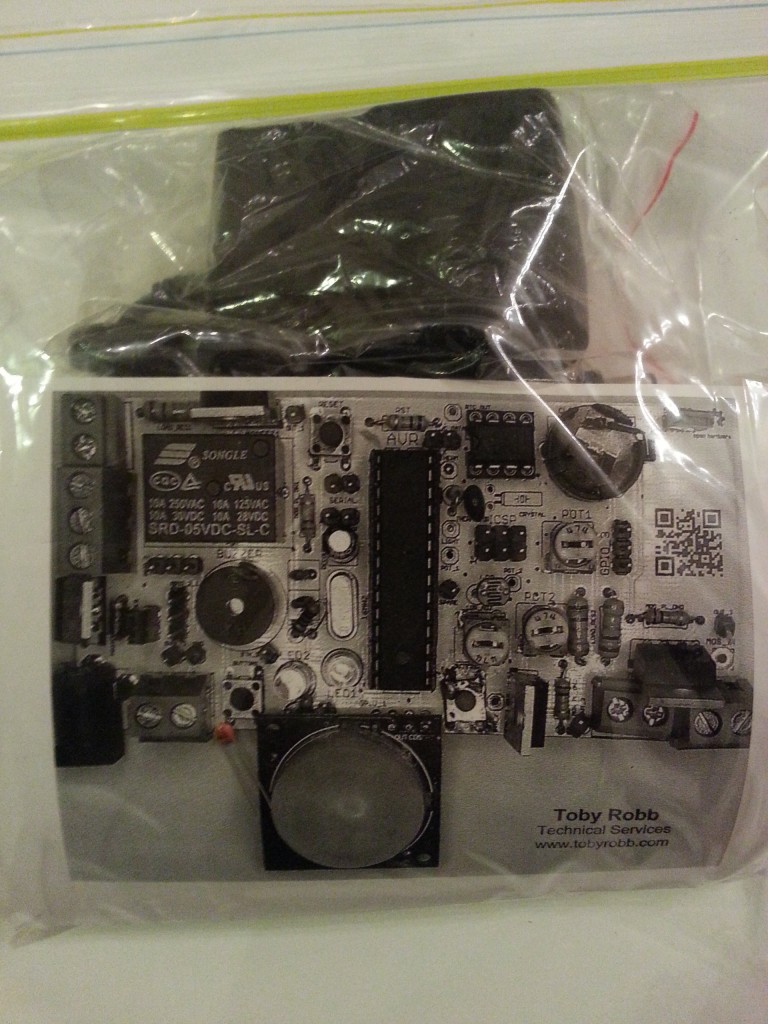
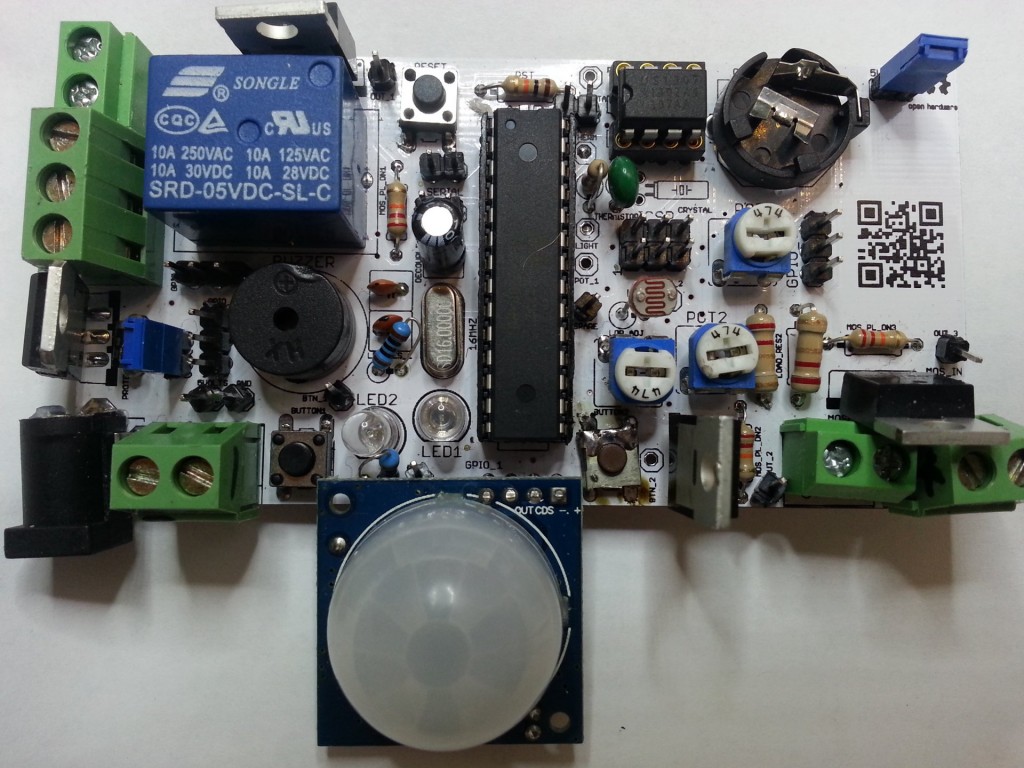
On board power regulator with a DC jack in, light dependant resistor, temperature thermistor, relay, piezo speaker, reset button, real time battery backed up clock,serial port, 2 buttons, 2 potentiometers, 2 LEDS, 2 servo ports, movement PIR sensor, 3 high power MosFets, 3 general purpose IO. All atmega pins and power supply pins are broken out to headers; power, mosfet and relay outputs are on screw terminal blocks. There is an ICSP programming header on board.

board on bag

I finished the schematic and layout of the board. I sent off the designs to the board house. The board has a few mistakes but on the whole I’m really happy with it.

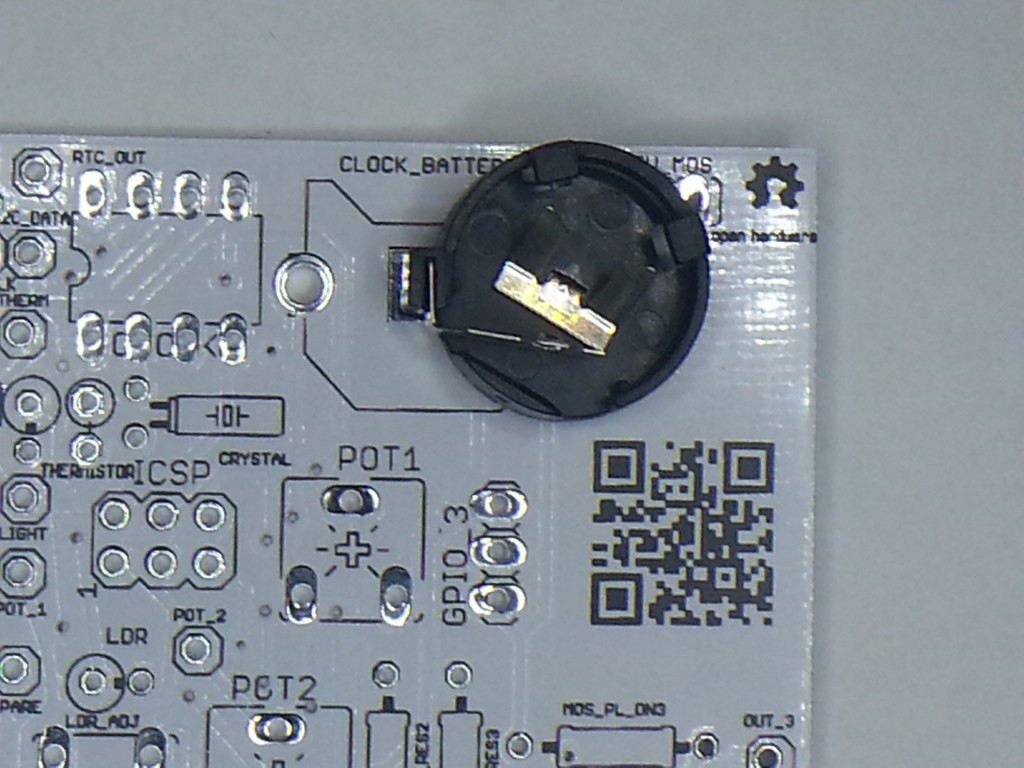
The worst bodge is the battery holder which has the polarity back to front, I forgot that a button cell has the positive polarity on the outside of the case unlike normal cells. I was magically able to slide the cell holder over and solve the problem temporarily, so that was great. The mosfet jumper if used must be changed to a right angle though.

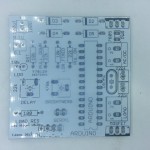
A lot of the polarities on the board are not marked, although a completed picture of the board makes assembly easy.

Board bodge

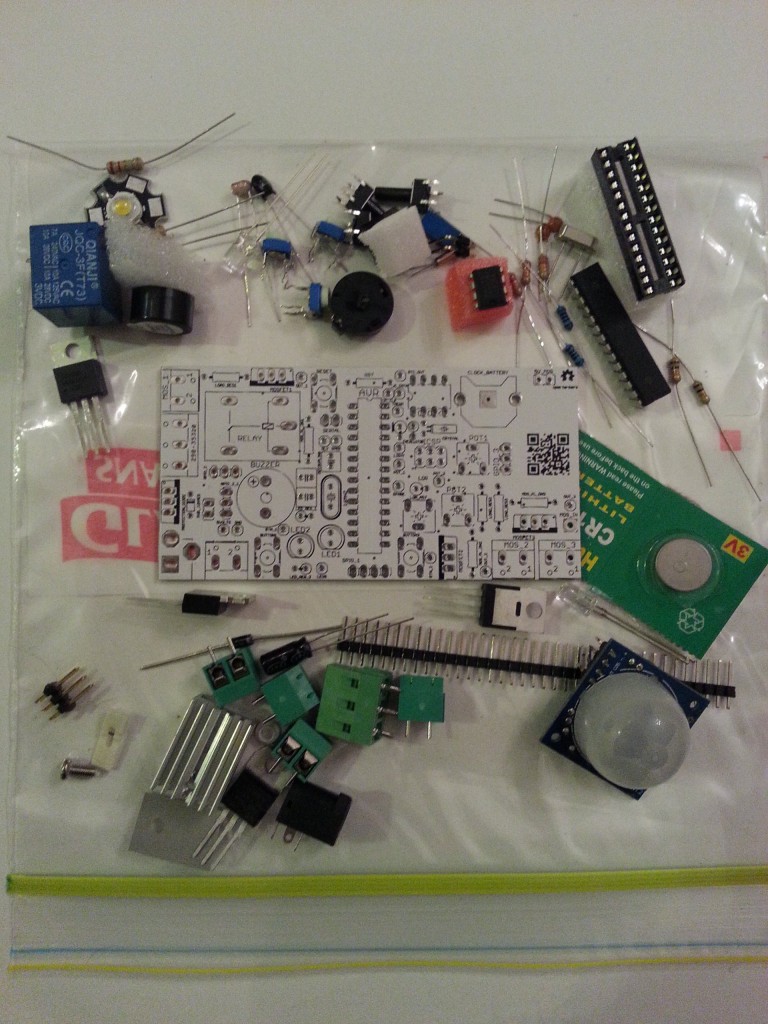
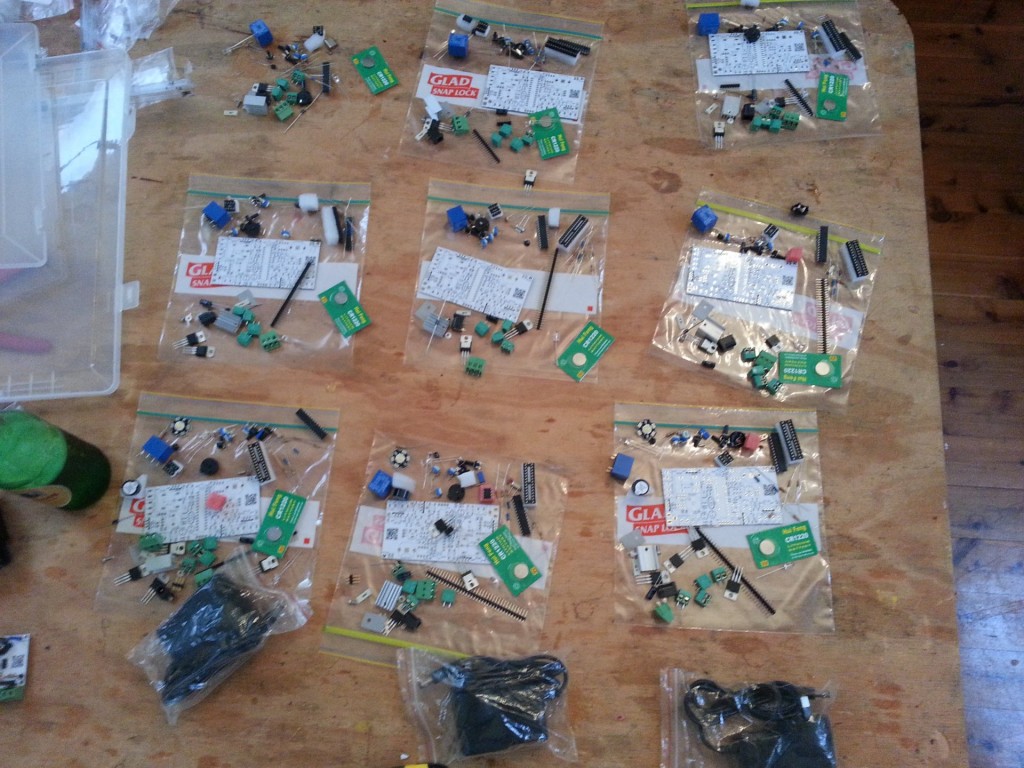
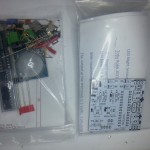
I paid for 10 boards at a little more than $2 each, then bought lots of parts at about $30 per board, so I could populate them. I decide to bag them all up individually and throw in a copy of the schematic and finished board picture with a few notes as well.

I thought I would give away a few kits to friends and throw a few up onto my blog shop for sale at the cost of parts only.
kits

The first thing i did when i got the boards, was put in the power system and check all the voltages, then i put the processor in with its crystal and caps. Then I uploaded a blink sketch and probed the led pin. After that all worked i just added parts one at a time testing each. I wrote a test sketch for all the functions. ,So far I have written code for a number of different tasks with it, including a clock, a thermostat relay, a movement sensitive night light, an RGB controller, and a dimmable led driver. There are many more things I will be using the board for in the future.bagged

If I run another batch of boards, I will fix the backup battery polarity, the labelling, change the back art, and maybe add an LCD header.

Here is the schematic, feel free to contact me for the board files and any code I have.

Here is my first test sketch..

/*

Arduino Dev board

20 July 2013

Toby Robb

This is a test sketch for the Arduino Development board
NOTES:

You must enable the internal pullups for the buttons by setting as inputs then writing HIGH
The leds if fitted also require the pullups to be enabled

*/

// Includes

#include <Servo.h> // Include the servo library

// Defines

#define ldrPin A2 // Light dependant resistor pin on board.
#define thermistorPin A3 //Temperature thermistor pin on board.
#define ledPin 8 // Led pin High for one colour Low for another
#define speakerPin 4 // The onboard speaker pin
#define relayPin 2 // Pin for the relay
#define sparePin 13 //Spare pin breakout on board

#define dataPin A4 // The I2C bus DATA pin
#define clockPin A5 // The I2C CLOCK pin

#define pot1Pin A0 // Number 1 potentiometer on the board.
#define pot2Pin A1 // Number 2 potentiometer on the board.

#define button1Pin 7 // Button 1 pin
#define button2Pin 12 // Button 2 pin

#define gpio1Pin 5 // General Purpose Input/output 1 pin
#define gpio2Pin 6 // General Purpose Input/output 2 pin
#define gpio3Pin 11 // General Purpose Input/output 3 pin

#define mosfet1Pin 3 // Mosfet 1 drive pin
#define mosfet2Pin 9 // Mosfet 2 drive pin
#define mosfet3Pin 10 // Mosfet 3 drive pin

Servo servo1; // create servo object to control a servo
// a maximum of eight servo objects can be created
int servoPos = 0; // variable to store the servo position

void setup(){

// Setup the serial

Serial.begin(9600);
Serial.println(“Beginning Setup”);

// Set up the pins

pinMode(ldrPin, INPUT); // If the light sensor resistor is fitted
pinMode(thermistorPin, INPUT); // If the temperature sensor resistor is fitted
pinMode(ledPin, OUTPUT); // You MUST use this if the LED’s are fitted.
pinMode(relayPin, OUTPUT); // If the relay is fitted.
pinMode(speakerPin, OUTPUT); // If the speaker is fitted.
pinMode(pot1Pin, INPUT); // If the potentiometer is fitted
pinMode(pot2Pin, INPUT); // If the potentiometer is fitted
pinMode(button1Pin, INPUT); // If the button is fitted (write HIGH to enable pullups)
pinMode(button2Pin, INPUT); // If the button is fitted (write HIGH to enable pullups)
pinMode(mosfet1Pin, OUTPUT); // Mosfet 1 output
pinMode(mosfet2Pin, OUTPUT); // Mosfet 2 output
pinMode(mosfet3Pin, OUTPUT); // Mosfet 3 output

servo1.attach(11); // attaches the servo on pin 11 gpio 3 to the servo object

// default states
digitalWrite(ledPin, HIGH);
digitalWrite(dataPin, HIGH);
digitalWrite(clockPin, HIGH);
digitalWrite(relayPin, LOW);
digitalWrite(button1Pin, HIGH); // enables pullups for buttons
digitalWrite(button2Pin, HIGH); // enables pullups for buttons

servo1.write(0);
}

void loop(){

//beep the buzzer
Serial.println(“Beep”);
tone(speakerPin, 500); // begin tone at 1000 hertz
delay(150); // wait half a sec
noTone(speakerPin); // end beep

//flash the leds
Serial.println(“Flash the LED’s”);
for(int i = 0; i<=8; i++){
digitalWrite(ledPin, HIGH); // turn the LED on (HIGH is the voltage level)
delay(100); // wait for a second
digitalWrite(ledPin, LOW); // turn the LED off by making the voltage LOW
delay(100); // wait for a second
}

// Cycle the relay
digitalWrite(relayPin, HIGH);
Serial.println(“Relay ON”);
delay(1000);
digitalWrite(relayPin, LOW);
Serial.println(“Relay OFF”);

// Test the mosfets

Serial.println(“Mosfet 1 blink”);
digitalWrite(mosfet1Pin, HIGH);
delay(250);
digitalWrite(mosfet1Pin, LOW);

Serial.println(“Mosfet 2 blink”);
digitalWrite(mosfet2Pin, HIGH);
delay(250);
digitalWrite(mosfet2Pin, LOW);

Serial.println(“Mosfet 3 blink”);
digitalWrite(mosfet3Pin, HIGH);
delay(250);
digitalWrite(mosfet3Pin, LOW);

// Sweep the servo on GPIO 3

Serial.println(“Sweep the servo”);
for(servoPos = 0; servoPos < 180; servoPos += 1) // goes from 0 degrees to 180 degrees
{ // in steps of 1 degree
servo1.write(servoPos); // tell servo to go to position in variable ‘servoPos’
delay(15); // waits 15ms for the servo to reach the position
}
for(servoPos = 180; servoPos>=1; servoPos-=1) // goes from 180 degrees to 0 degrees
{
servo1.write(servoPos); // tell servo to go to position in variable ‘servoPos’
delay(15); // waits 15ms for the servo to reach the position
}

// Print the value of the button states

Serial.print(“Button one state : “);
Serial.println(digitalRead(button1Pin));
Serial.print(“Button two state : “);
Serial.println(digitalRead(button2Pin));
delay(1000);

// Show the value of the LDR for a few seconds
for(int i = 0; i <=50; i++){
Serial.print(“The brightness : “);
Serial.println(analogRead(ldrPin));
}

//show the value of the temperature thermistor for a few seconds
for(int i = 0; i <=50; i++){
Serial.print(“The Temperature : “);
Serial.println(analogRead(thermistorPin));
}

// Print off the potentiometer value for a few seconds
for(int i = 0; i <=50; i++){
Serial.print(“Potentiometer one : “);
Serial.println(analogRead(pot1Pin));
}
for(int i = 0; i <=50; i++){
Serial.print(“Potentiometer two : “);
Serial.println(analogRead(pot2Pin));
}

delay(3000);

}

Morse code keyer for Arduino

Morse code keyer for Arduino.

I recently decided to build another project, this time involving morse code and the arduino.
2013-08-18 15.36.25


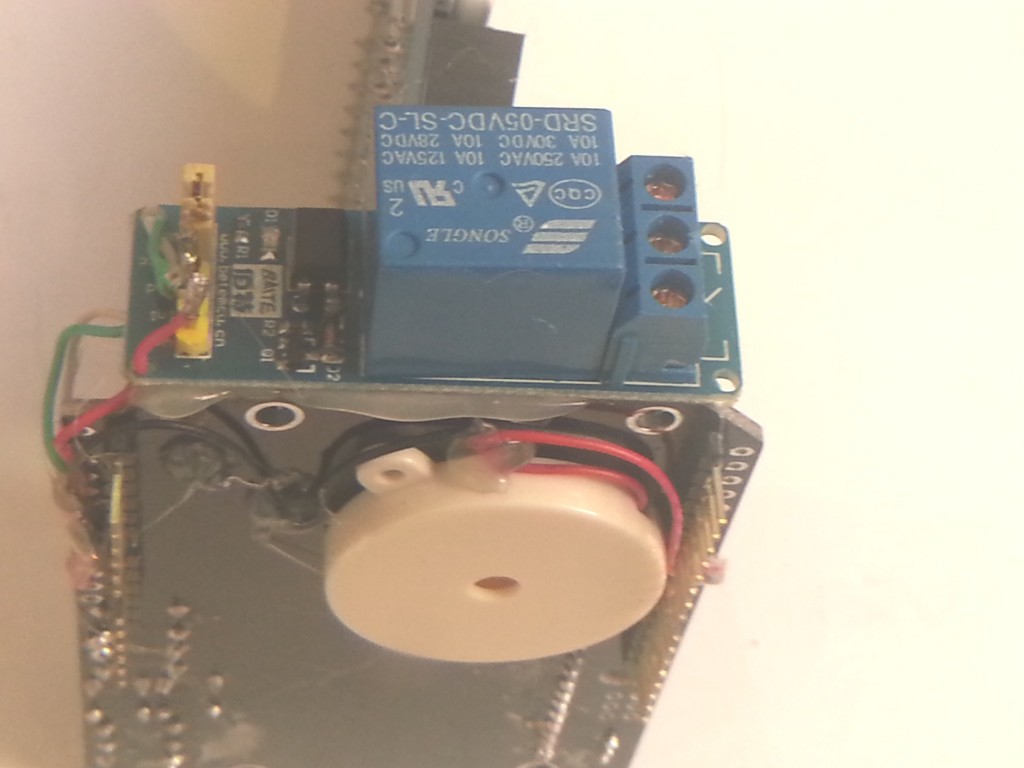
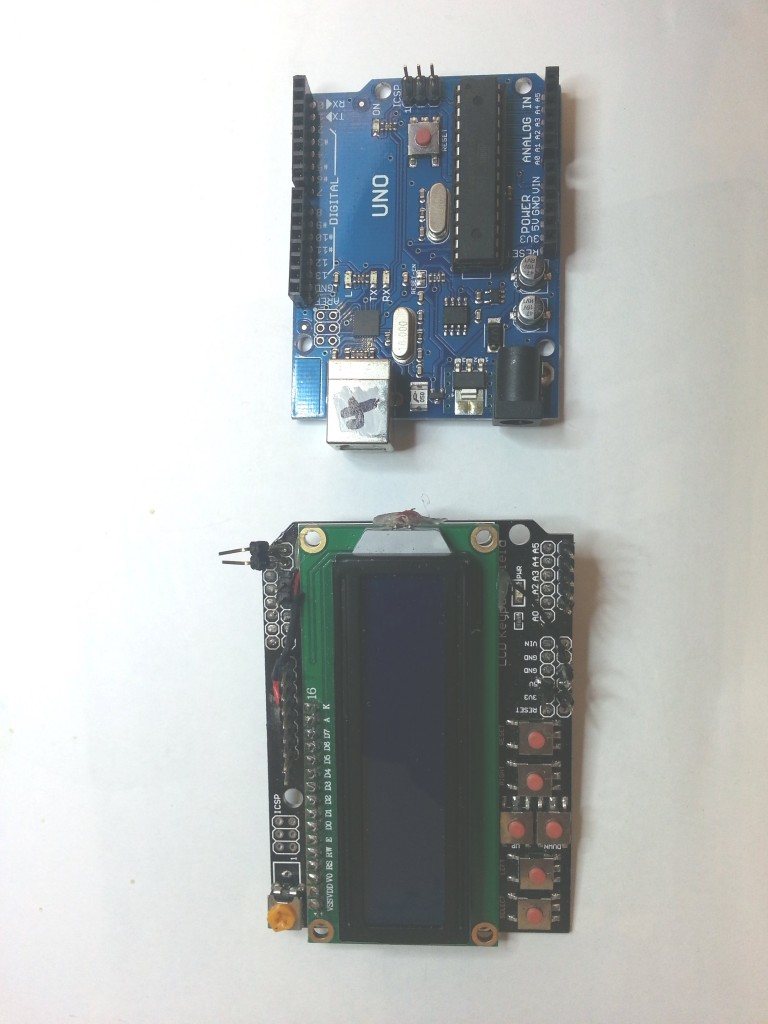
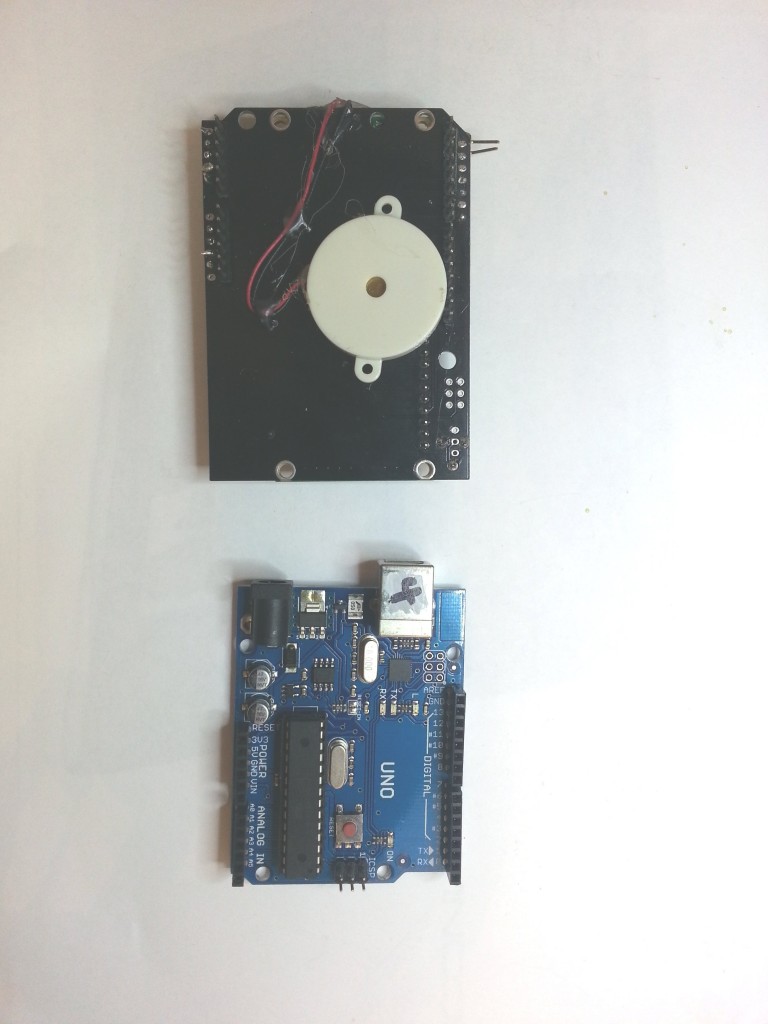
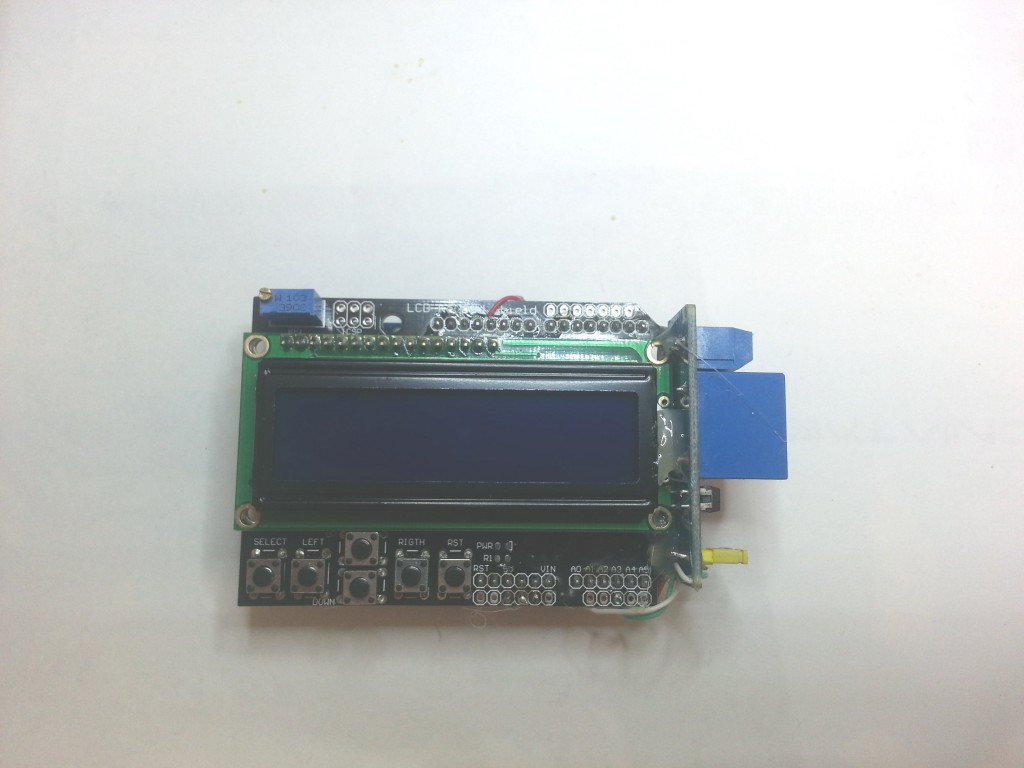
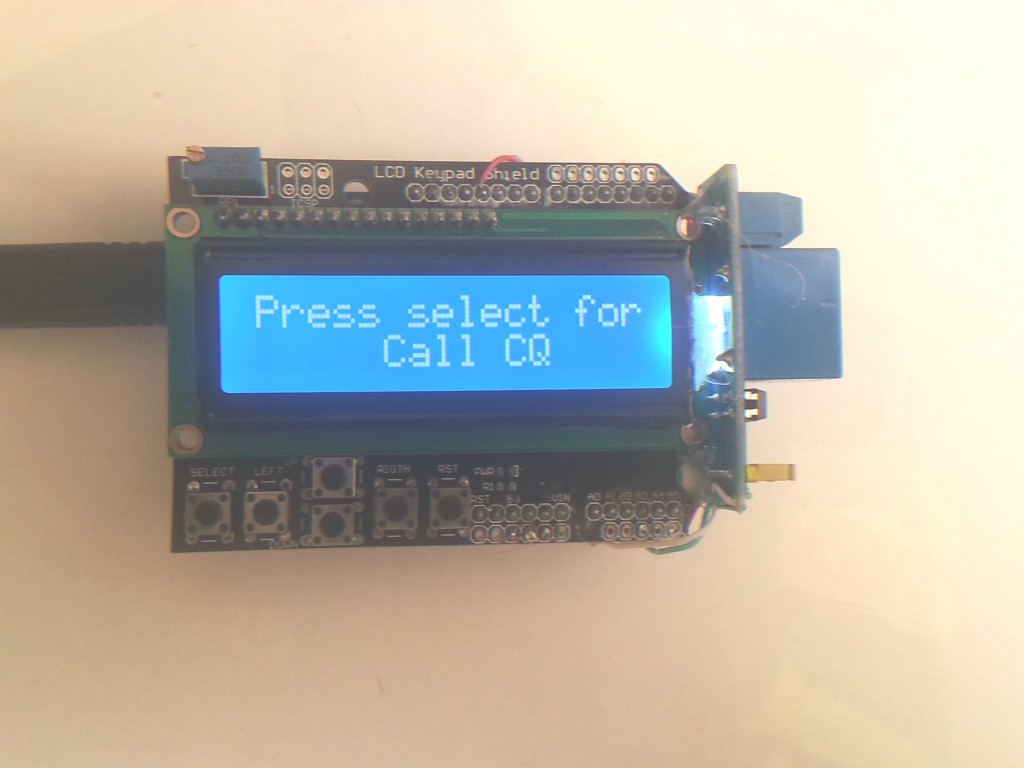
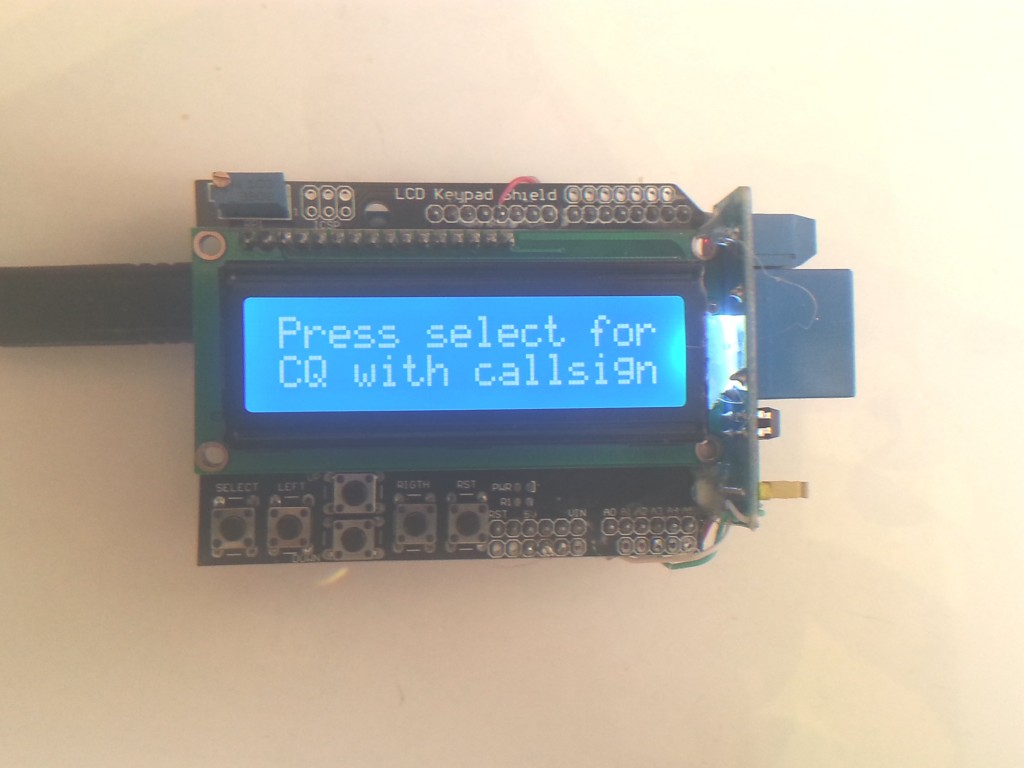
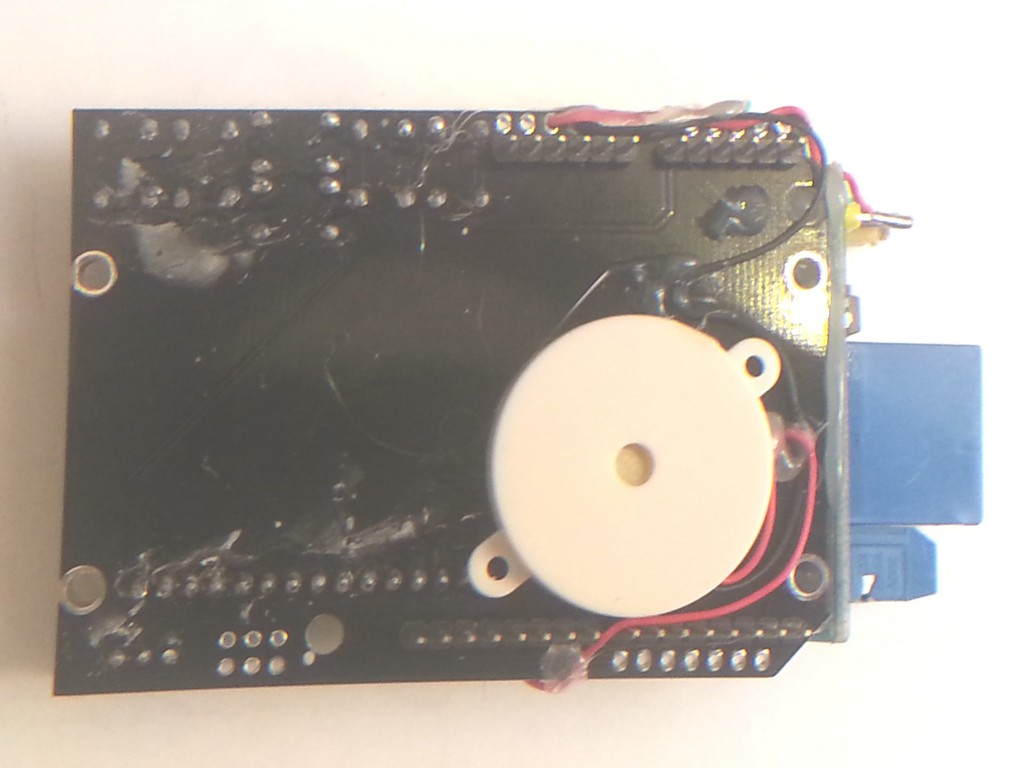
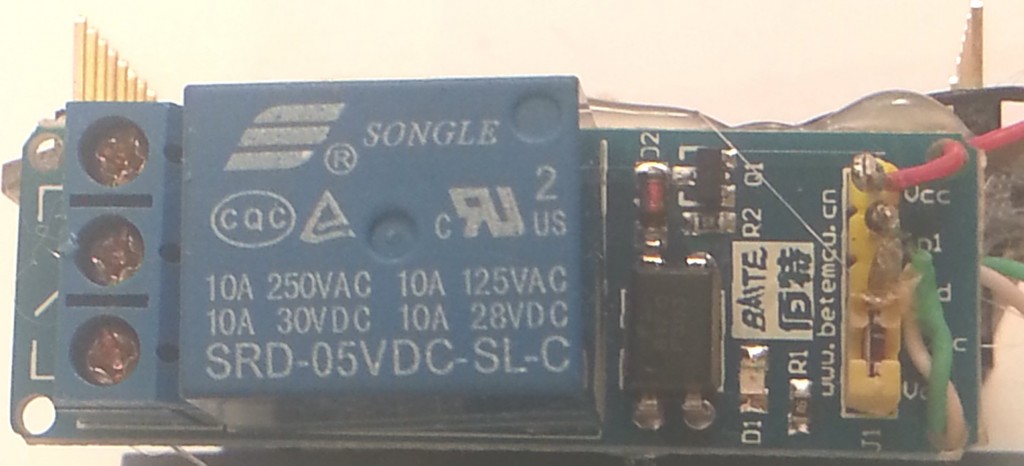
I took a standard Arduino UNO, an LCD keypad shield, a relay module and a piezo buzzer. Total cost was under $25
2013-08-18 15.36.12

What does it do?

Well it can send morse cq’s or any morse message to the onboard piezo or the relay for connection across a radio key. It has the ability to adjust the speed and timing of the morse. It demo’s the morse alphabet. You can decide it you want to use the relay or not. It can save the settings to the onboard EEPROM and keep them on power off.
2013-08-18 15.31.26


2013-08-18 15.33.03


2013-08-18 15.31.48


2013-08-18 15.28.19


2013-08-18 15.27.59


2013-08-18 15.29.23


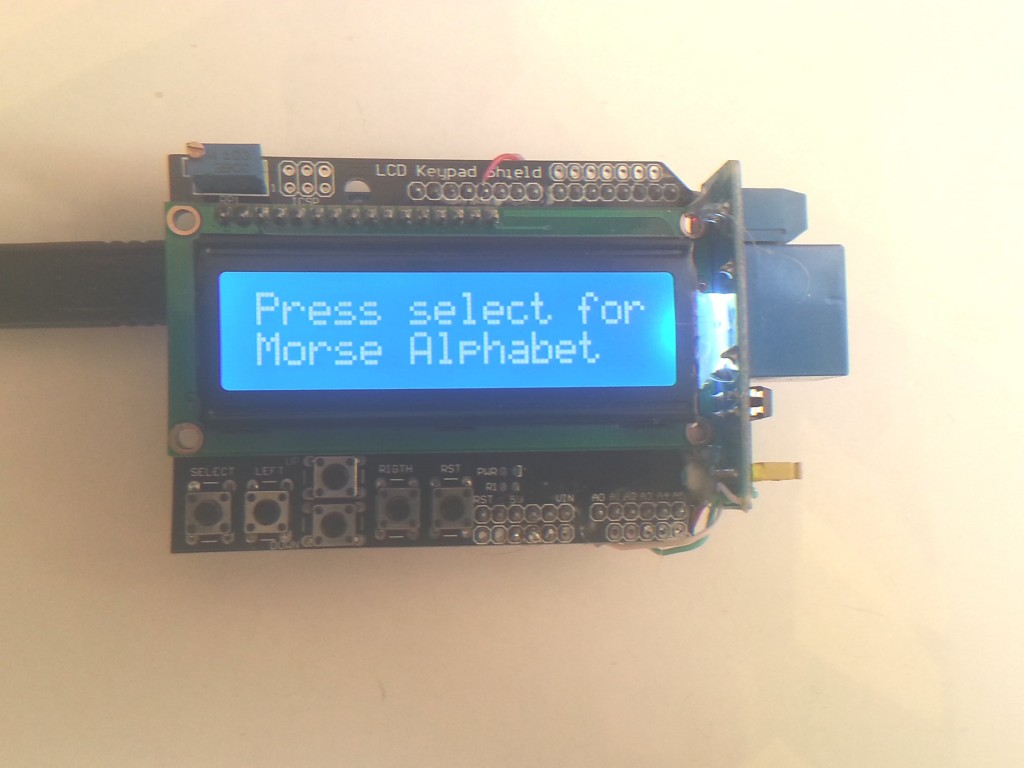
The code was a little complicated to write, but it was my first attempt at a menu system. Initially i imagined a grid system of menus using up/down/left/right. Each row would represent a type of function and the pages along the row each related to each other. This meant holding a variable for the column number, a variable for row number, both of which to be looped around or limited. I would then also need to keep a number at the intersection of the row and column which would be the page number. Phew, 3 variables just to start with. I did manage to get it working but wondered if there was a smarter way to go about it.
2013-08-18 15.36.37

I believe in trying to do it your self, so you can learn first. Once you’ve tried it your way, head over to the web and see how the programmers do it! I decided to look around the web.

One example i saw, had left or right scrolling through all of the functions, looping back around to the start. One variable, the program number, incremented or decremented by the left and right keys. Much smarter,simpler and good enough for what i was trying to do here, keep it simple for me and if anyone else wanted to use it.

So that’s pretty much how the code goes.
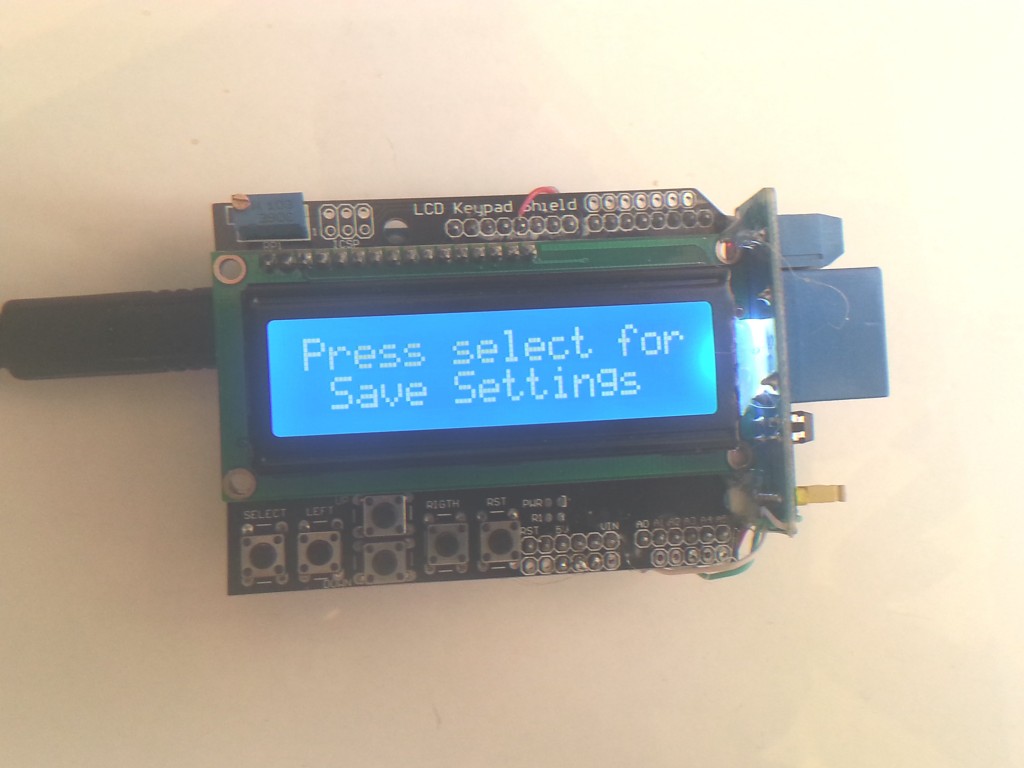
2013-08-18 15.35.38

I browsed around the web trying to improve my programming skills, as this was probably the hardest code I had written to date. I learned somewhere along the way that good practice was to write out all your comments first, then fill the code in later.

For example;

// here is where the setup will be

// here is where we will define all the variables

// This is the routine that converts a letter into dits and dahs

// this is where the menu code will live


And so on. I added a notes section that described the programs way of working. And i added a TO DO list, for example;

TODO:

add press any key to abort

change pitch of morse key sound

add numbers and special characters

maybe reduce system to one key, short press advances menu, long press to use

provide ability to enter a custom message ie callsign direct from the keypad

beacon menu support

serial control or ethernet if possible

special sounds? psk replies??


A todo list was something that i later found to be an invaluable way of adding things that needed to be fixed.

There have been ten revisions so far, each one adding more capability to the device, I hope the code can be improved further still. There’s even a bit of silly stuff thrown in there for fun.


/*

T Robb 12 sep 12

just a dodgy bit of code, that ought to let you play morse through a speaker or a relay

$ver 0.40
NOTES:

it waits to see if a key has been pressed, if so it increments or decrements the programnumber.
then it compares the programnumber against a number: switch(programnumber)
and runs the appropriate menu

all the functions are at the bottom

there are functions for each letter

there are generally functions for each menu

you may need to put delays in between each letter
TODO:
press any key to abort

change pitch of morse key sound

relay on or off

add numbers and special characters

maybe reduce system to one key

add saving of the variables to non volatile ram

provide ability to enter a custom message ie callsign

beacon support

serial control or ethernet if possible

special sounds? psk replies??

*/

/*************************************************
* Get the notes and stuff just for the music out of the way first. the music is not really important , just a gimmick really
*************************************************/

#define NOTE_B0 31
#define NOTE_C1 33
#define NOTE_CS1 35
#define NOTE_D1 37
#define NOTE_DS1 39
#define NOTE_E1 41
#define NOTE_F1 44
#define NOTE_FS1 46
#define NOTE_G1 49
#define NOTE_GS1 52
#define NOTE_A1 55
#define NOTE_AS1 58
#define NOTE_B1 62
#define NOTE_C2 65
#define NOTE_CS2 69
#define NOTE_D2 73
#define NOTE_DS2 78
#define NOTE_E2 82
#define NOTE_F2 87
#define NOTE_FS2 93
#define NOTE_G2 98
#define NOTE_GS2 104
#define NOTE_A2 110
#define NOTE_AS2 117
#define NOTE_B2 123
#define NOTE_C3 131
#define NOTE_CS3 139
#define NOTE_D3 147
#define NOTE_DS3 156
#define NOTE_E3 165
#define NOTE_F3 175
#define NOTE_FS3 185
#define NOTE_G3 196
#define NOTE_GS3 208
#define NOTE_A3 220
#define NOTE_AS3 233
#define NOTE_B3 247
#define NOTE_C4 262
#define NOTE_CS4 277
#define NOTE_D4 294
#define NOTE_DS4 311
#define NOTE_E4 330
#define NOTE_F4 349
#define NOTE_FS4 370
#define NOTE_G4 392
#define NOTE_GS4 415
#define NOTE_A4 440
#define NOTE_AS4 466
#define NOTE_B4 494
#define NOTE_C5 523
#define NOTE_CS5 554
#define NOTE_D5 587
#define NOTE_DS5 622
#define NOTE_E5 659
#define NOTE_F5 698
#define NOTE_FS5 740
#define NOTE_G5 784
#define NOTE_GS5 831
#define NOTE_A5 880
#define NOTE_AS5 932
#define NOTE_B5 988
#define NOTE_C6 1047
#define NOTE_CS6 1109
#define NOTE_D6 1175
#define NOTE_DS6 1245
#define NOTE_E6 1319
#define NOTE_F6 1397
#define NOTE_FS6 1480
#define NOTE_G6 1568
#define NOTE_GS6 1661
#define NOTE_A6 1760
#define NOTE_AS6 1865
#define NOTE_B6 1976
#define NOTE_C7 2093
#define NOTE_CS7 2217
#define NOTE_D7 2349
#define NOTE_DS7 2489
#define NOTE_E7 2637
#define NOTE_F7 2794
#define NOTE_FS7 2960
#define NOTE_G7 3136
#define NOTE_GS7 3322
#define NOTE_A7 3520
#define NOTE_AS7 3729
#define NOTE_B7 3951
#define NOTE_C8 4186
#define NOTE_CS8 4435
#define NOTE_D8 4699
#define NOTE_DS8 4978
#define OCTAVE_OFFSET 0

int notes[] = { 0,
NOTE_C4, NOTE_CS4, NOTE_D4, NOTE_DS4, NOTE_E4, NOTE_F4, NOTE_FS4, NOTE_G4, NOTE_GS4, NOTE_A4, NOTE_AS4, NOTE_B4,
NOTE_C5, NOTE_CS5, NOTE_D5, NOTE_DS5, NOTE_E5, NOTE_F5, NOTE_FS5, NOTE_G5, NOTE_GS5, NOTE_A5, NOTE_AS5, NOTE_B5,
NOTE_C6, NOTE_CS6, NOTE_D6, NOTE_DS6, NOTE_E6, NOTE_F6, NOTE_FS6, NOTE_G6, NOTE_GS6, NOTE_A6, NOTE_AS6, NOTE_B6,
NOTE_C7, NOTE_CS7, NOTE_D7, NOTE_DS7, NOTE_E7, NOTE_F7, NOTE_FS7, NOTE_G7, NOTE_GS7, NOTE_A7, NOTE_AS7, NOTE_B7
};

// we can choose a song here, its placing the notes in a character array which is being referenced in the menu

char *song1 = “The Simpsons:d=4,o=5,b=160:c.6,e6,f#6,8a6,g.6,e6,c6,8a,8f#,8f#,8f#,2g,8p,8p,8f#,8f#,8f#,8g,a#.,8c6,8c6,8c6,c6″;
//char *song = “Indiana:d=4,o=5,b=250:e,8p,8f,8g,8p,1c6,8p.,d,8p,8e,1f,p.,g,8p,8a,8b,8p,1f6,p,a,8p,8b,2c6,2d6,2e6,e,8p,8f,8g,8p,1c6,p,d6,8p,8e6,1f.6,g,8p,8g,e.6,8p,d6,8p,8g,e.6,8p,d6,8p,8g,f.6,8p,e6,8p,8d6,2c6″;
//char *song = “TakeOnMe:d=4,o=4,b=160:8f#5,8f#5,8f#5,8d5,8p,8b,8p,8e5,8p,8e5,8p,8e5,8g#5,8g#5,8a5,8b5,8a5,8a5,8a5,8e5,8p,8d5,8p,8f#5,8p,8f#5,8p,8f#5,8e5,8e5,8f#5,8e5,8f#5,8f#5,8f#5,8d5,8p,8b,8p,8e5,8p,8e5,8p,8e5,8g#5,8g#5,8a5,8b5,8a5,8a5,8a5,8e5,8p,8d5,8p,8f#5,8p,8f#5,8p,8f#5,8e5,8e5″;
//char *song = “Entertainer:d=4,o=5,b=140:8d,8d#,8e,c6,8e,c6,8e,2c.6,8c6,8d6,8d#6,8e6,8c6,8d6,e6,8b,d6,2c6,p,8d,8d#,8e,c6,8e,c6,8e,2c.6,8p,8a,8g,8f#,8a,8c6,e6,8d6,8c6,8a,2d6″;
//char *song = “Muppets:d=4,o=5,b=250:c6,c6,a,b,8a,b,g,p,c6,c6,a,8b,8a,8p,g.,p,e,e,g,f,8e,f,8c6,8c,8d,e,8e,8e,8p,8e,g,2p,c6,c6,a,b,8a,b,g,p,c6,c6,a,8b,a,g.,p,e,e,g,f,8e,f,8c6,8c,8d,e,8e,d,8d,c”;
//char *song = “Xfiles:d=4,o=5,b=125:e,b,a,b,d6,2b.,1p,e,b,a,b,e6,2b.,1p,g6,f#6,e6,d6,e6,2b.,1p,g6,f#6,e6,d6,f#6,2b.,1p,e,b,a,b,d6,2b.,1p,e,b,a,b,e6,2b.,1p,e6,2b.”;
//char *song = “Looney:d=4,o=5,b=140:32p,c6,8f6,8e6,8d6,8c6,a.,8c6,8f6,8e6,8d6,8d#6,e.6,8e6,8e6,8c6,8d6,8c6,8e6,8c6,8d6,8a,8c6,8g,8a#,8a,8f”;
//char *song = “20thCenFox:d=16,o=5,b=140:b,8p,b,b,2b,p,c6,32p,b,32p,c6,32p,b,32p,c6,32p,b,8p,b,b,b,32p,b,32p,b,32p,b,32p,b,32p,b,32p,b,32p,g#,32p,a,32p,b,8p,b,b,2b,4p,8e,8g#,8b,1c#6,8f#,8a,8c#6,1e6,8a,8c#6,8e6,1e6,8b,8g#,8a,2b”;
//char *song = “Bond:d=4,o=5,b=80:32p,16c#6,32d#6,32d#6,16d#6,8d#6,16c#6,16c#6,16c#6,16c#6,32e6,32e6,16e6,8e6,16d#6,16d#6,16d#6,16c#6,32d#6,32d#6,16d#6,8d#6,16c#6,16c#6,16c#6,16c#6,32e6,32e6,16e6,8e6,16d#6,16d6,16c#6,16c#7,c.7,16g#6,16f#6,g#.6″;
//char *song = “MASH:d=8,o=5,b=140:4a,4g,f#,g,p,f#,p,g,p,f#,p,2e.,p,f#,e,4f#,e,f#,p,e,p,4d.,p,f#,4e,d,e,p,d,p,e,p,d,p,2c#.,p,d,c#,4d,c#,d,p,e,p,4f#,p,a,p,4b,a,b,p,a,p,b,p,2a.,4p,a,b,a,4b,a,b,p,2a.,a,4f#,a,b,p,d6,p,4e.6,d6,b,p,a,p,2b”;
//char *song = “StarWars:d=4,o=5,b=45:32p,32f#,32f#,32f#,8b.,8f#.6,32e6,32d#6,32c#6,8b.6,16f#.6,32e6,32d#6,32c#6,8b.6,16f#.6,32e6,32d#6,32e6,8c#.6,32f#,32f#,32f#,8b.,8f#.6,32e6,32d#6,32c#6,8b.6,16f#.6,32e6,32d#6,32c#6,8b.6,16f#.6,32e6,32d#6,32e6,8c#6″;
//char *song = “GoodBad:d=4,o=5,b=56:32p,32a#,32d#6,32a#,32d#6,8a#.,16f#.,16g#.,d#,32a#,32d#6,32a#,32d#6,8a#.,16f#.,16g#.,c#6,32a#,32d#6,32a#,32d#6,8a#.,16f#.,32f.,32d#.,c#,32a#,32d#6,32a#,32d#6,8a#.,16g#.,d#”;
//char *song = “TopGun:d=4,o=4,b=31:32p,16c#,16g#,16g#,32f#,32f,32f#,32f,16d#,16d#,32c#,32d#,16f,32d#,32f,16f#,32f,32c#,16f,d#,16c#,16g#,16g#,32f#,32f,32f#,32f,16d#,16d#,32c#,32d#,16f,32d#,32f,16f#,32f,32c#,g#”;
//char *song = “A-Team:d=8,o=5,b=125:4d#6,a#,2d#6,16p,g#,4a#,4d#.,p,16g,16a#,d#6,a#,f6,2d#6,16p,c#.6,16c6,16a#,g#.,2a#”;
//char *song = “Flinstones:d=4,o=5,b=40:32p,16f6,16a#,16a#6,32g6,16f6,16a#.,16f6,32d#6,32d6,32d6,32d#6,32f6,16a#,16c6,d6,16f6,16a#.,16a#6,32g6,16f6,16a#.,32f6,32f6,32d#6,32d6,32d6,32d#6,32f6,16a#,16c6,a#,16a6,16d.6,16a#6,32a6,32a6,32g6,32f#6,32a6,8g6,16g6,16c.6,32a6,32a6,32g6,32g6,32f6,32e6,32g6,8f6,16f6,16a#.,16a#6,32g6,16f6,16a#.,16f6,32d#6,32d6,32d6,32d#6,32f6,16a#,16c.6,32d6,32d#6,32f6,16a#,16c.6,32d6,32d#6,32f6,16a#6,16c7,8a#.6″;
//char *song = “Jeopardy:d=4,o=6,b=125:c,f,c,f5,c,f,2c,c,f,c,f,a.,8g,8f,8e,8d,8c#,c,f,c,f5,c,f,2c,f.,8d,c,a#5,a5,g5,f5,p,d#,g#,d#,g#5,d#,g#,2d#,d#,g#,d#,g#,c.7,8a#,8g#,8g,8f,8e,d#,g#,d#,g#5,d#,g#,2d#,g#.,8f,d#,c#,c,p,a#5,p,g#.5,d#,g#”;
char *song2 = “Gadget:d=16,o=5,b=50:32d#,32f,32f#,32g#,a#,f#,a,f,g#,f#,32d#,32f,32f#,32g#,a#,d#6,4d6,32d#,32f,32f#,32g#,a#,f#,a,f,g#,f#,8d#”;
//char *song = “Smurfs:d=32,o=5,b=200:4c#6,16p,4f#6,p,16c#6,p,8d#6,p,8b,p,4g#,16p,4c#6,p,16a#,p,8f#,p,8a#,p,4g#,4p,g#,p,a#,p,b,p,c6,p,4c#6,16p,4f#6,p,16c#6,p,8d#6,p,8b,p,4g#,16p,4c#6,p,16a#,p,8b,p,8f,p,4f#”;
//char *song = “MahnaMahna:d=16,o=6,b=125:c#,c.,b5,8a#.5,8f.,4g#,a#,g.,4d#,8p,c#,c.,b5,8a#.5,8f.,g#.,8a#.,4g,8p,c#,c.,b5,8a#.5,8f.,4g#,f,g.,8d#.,f,g.,8d#.,f,8g,8d#.,f,8g,d#,8c,a#5,8d#.,8d#.,4d#,8d#.”;
//char *song = “LeisureSuit:d=16,o=6,b=56:f.5,f#.5,g.5,g#5,32a#5,f5,g#.5,a#.5,32f5,g#5,32a#5,g#5,8c#.,a#5,32c#,a5,a#.5,c#.,32a5,a#5,32c#,d#,8e,c#.,f.,f.,f.,f.,f,32e,d#,8d,a#.5,e,32f,e,32f,c#,d#.,c#”;
//char *song = “MissionImp:d=16,o=6,b=95:32d,32d#,32d,32d#,32d,32d#,32d,32d#,32d,32d,32d#,32e,32f,32f#,32g,g,8p,g,8p,a#,p,c7,p,g,8p,g,8p,f,p,f#,p,g,8p,g,8p,a#,p,c7,p,g,8p,g,8p,f,p,f#,p,a#,g,2d,32p,a#,g,2c#,32p,a#,g,2c,a#5,8c,2p,32p,a#5,g5,2f#,32p,a#5,g5,2f,32p,a#5,g5,2e,d#,8d”;
// include the library code:

#include <LiquidCrystal.h> // The library for the LCD display
#include <EEPROM.h> // the library for writing to and from the EEPROM

// initialize the LCD library with the numbers of the interface pins
// pin 10 is revserved for backlight pin on my lcd keypad, so remember not to use that for anything else
LiquidCrystal lcd(8, 9, 4, 5, 6, 7);
int buttonPin = A0; // The button pin on my keypad
int speakerPin = 11; // The spare pin i have chosen to drive a piezo speaker
int relayPin = A3; // The pin i have chosen to drive the relay. 40ma is recommended max, in practice you may get a little higher.

// define all the morse lengths and pitch here.

int key = 700; // pitch of the morse key 900hz?
int dit = 400; // length of a dit in milliseconds
int dah = 1300; // length of a dit in milliseconds

int space_dahdits = 150; // space between dots and dashes
int space_char = 380; // space between letters (may not be used)
int space_word = 1140; // space between words (may not be used)

int relayCase = 0; // toggle the choice of wether we want the relay to be used

int maxprogramnumber = 16; // dont forget to increase the menu numbers here!!
int programnumber = 1;
// this is where the main routine runs
void setup() {
Serial.begin(9600);

pinMode(buttonPin, INPUT);
pinMode(relayPin, OUTPUT);
digitalWrite(relayPin, HIGH); // the relay is a low to turn on so we keep it high at the start

// set up the LCD’s number of columns and rows:
lcd.begin(16, 2);

tone(speakerPin, 900, 75);
lcd.clear();
lcd.setCursor(0, 0);
lcd.print(” T.Robb V0.46 “); //Print a little message
lcd.setCursor(0, 1);
lcd.print(“Long Live Morse! “);
delay(1500);


readEeprom(); // this is where we read in the eeprom values

menu();

}
void loop() {
}

void menu(){
Serial.println(programnumber);
Serial.println(analogRead(14));
Serial.println(relayCase);

switch(programnumber){

// This is where you add or remove menu items and changs the menu names
// dont forget to increase the menu numbers at the bottom

case 1:
lcd.setCursor(0, 0);
lcd.print(“Press select for.”);
lcd.setCursor(0, 1);
lcd.print(“Morse Alphabet “);
break;

case 2:
lcd.setCursor(0, 0);
lcd.print(“Press select for.”);
lcd.setCursor(0, 1);
lcd.print(” Call CQ “);
break;

case 3:
lcd.setCursor(0, 0);
lcd.print(“Press select for.”);
lcd.setCursor(0, 1);
lcd.print(“CQ with callsign”);
break;
case 4:
lcd.setCursor(0, 0);
lcd.print(“Press select for.”);
lcd.setCursor(0, 1);
lcd.print(“Play Callsign “);
break;

case 5:
lcd.setCursor(0, 0);
lcd.print(“Press select for.”);
lcd.setCursor(0, 1);
lcd.print(“This is callsign”);
break;

case 6:
lcd.setCursor(0, 0);
lcd.print(“Press select for.”);
lcd.setCursor(0, 1);
lcd.print(“The Simpsons?? “);
break;

case 7:
lcd.setCursor(0, 0);
lcd.print(“Press select for.”);
lcd.setCursor(0, 1);
lcd.print(“Inspector Gadget”);
break;

case 8:
lcd.setCursor(0, 0);
lcd.print(“Press select for.”);
lcd.setCursor(0, 1);
lcd.print(“Increase speed +”);
break;

case 9:
lcd.setCursor(0, 0);
lcd.print(“Press select for.”);
lcd.setCursor(0, 1);
lcd.print(“Decrease speed -”);
break;

case 10:
lcd.setCursor(0, 0);
lcd.print(“Press select for.”);
lcd.setCursor(0, 1);
lcd.print(“Space length +”);
break;

case 11:
lcd.setCursor(0, 0);
lcd.print(“Press select for.”);
lcd.setCursor(0, 1);
lcd.print(“Space length -”);
break;

case 12:
lcd.setCursor(0, 0);
lcd.print(“Press select for.”);
lcd.setCursor(0, 1);
lcd.print(“Increase pitch +”);
break;

case 13:
lcd.setCursor(0, 0);
lcd.print(“Press select for.”);
lcd.setCursor(0, 1);
lcd.print(“Decrease pitch -”);
break;

case 14:
lcd.setCursor(0, 0);
lcd.print(“Press select for.”);
lcd.setCursor(0, 1);
lcd.print(” Toggle Relay “);
break;

case 15:
lcd.setCursor(0, 0);
lcd.print(“Press select for.”);
lcd.setCursor(0, 1);
lcd.print(” Save Settings “);
break;

case 16:
lcd.setCursor(0, 0);
lcd.print(“Press select for.”);
lcd.setCursor(0, 1);
lcd.print(“Default Settings”);
break;

default:
lcd.setCursor(0, 0);
lcd.print(“Press select for.”);
lcd.setCursor(0, 1);
lcd.print(“Plays Callsign “);
break;
}

// dont forget to increment maxprogramnumber at the top of file
while((analogRead(buttonPin))>=1000){} // do nothing while no buttons pressed to chill out
delay(5);

if((analogRead(buttonPin))<=50){

programnumber++;
delay(300);
}

if(analogRead(buttonPin)>=100 && analogRead(buttonPin)<=200){
programnumber-;
delay(30);
}

if(analogRead(buttonPin)>=200 && analogRead(buttonPin)<=400){

programnumber++;
delay(10);
}

if(analogRead(buttonPin)>=400 && analogRead(buttonPin)<=600){
programnumber-;
delay(300);
}

if(programnumber > maxprogramnumber){programnumber = 1;} // this is where the menu goes around and around
if(programnumber < 1){programnumber = maxprogramnumber;}

if(analogRead(buttonPin)>=600 && analogRead(buttonPin)<=800){
Serial.println(“Button Pressed”);

switch(programnumber){

case 1:
Serial.println(“alphabet”);
alphabet();
break;

case 2:
Serial.println(“play 1″);
cq();
cq();
cq();
break;

case 3:
Serial.println(“play 3″);
cqCallsign();
break;

case 4:
Serial.println(“play 2″);
callsign();
break;

case 5:
Serial.println(“play 4″);
thisIs();
break;

case 6:
Serial.println(“play 5″);
play_rtttl(song1);
break;

case 7:
Serial.println(“play 5″);
play_rtttl(song2);
break;

case 8:
Serial.println(“speed up”);
faster();
break;

case 9:
Serial.println(“slow down”);
slower();
break;

case 10:
Serial.println(“space length increase”);
spaceLonger();
break;

case 11:
Serial.println(“space length decrease”);
spaceShorter();
break;

case 12:
Serial.println(“Key pitch up”);
pitchUp();
break;

case 13:
Serial.println(“Key pitch down”);
pitchDown();
break;

case 14:
Serial.println(“Default Settings”);
toggleRelay();
break;

case 15:
Serial.println(“Save Settings”);
save();
break;

case 16:
Serial.println(“Default Settings”);
clearEeprom();
break;

default:
Serial.println(“play 1″);
callsign();
break;
}
}
delay(300);
lcd.clear();

menu();
}


void dot(){ // This is the main dot routine
for(int a = 0; a <= dit; a++){
tone(speakerPin, key);
if(relayCase){
digitalWrite(relayPin, LOW);
}
else{
digitalWrite(relayPin, HIGH);
}
}
noTone(speakerPin);
digitalWrite(relayPin, HIGH);

delay(space_dahdits);
delay(5);

}

void dash(){ // this is the main dash routine
for(int a = 0; a <= dah; a++){
tone(speakerPin, key);
if(relayCase){
digitalWrite(relayPin, LOW);
}
else{
digitalWrite(relayPin, HIGH);
}
}
noTone(speakerPin);
digitalWrite(relayPin, HIGH);

delay(space_dahdits);
delay(5);
}
void special_1(){

for(int i = 0; i <=3000; i = i + space_dahdits * 4){

tone(speakerPin, i);
delay(60);
noTone(speakerPin);
}
delay(60);

for(int i = 3000; i >=0; i = i - space_dahdits * 4){

tone(speakerPin, i);
delay(60);
noTone(speakerPin);
}

}
void special_2(){

for(int i = 0;i <=10; i++){

tone(speakerPin, 300, 500);
delay(50);
tone(speakerPin, 900, 500);
}
}
void cq(){

c();
delay(space_char);
q();
delay(space_char);

}

void callsign(){

v();
delay(space_char);
k();
delay(space_char);
two();
delay(space_char);
t();
delay(space_char);
o();
delay(space_char);
b();
delay(space_char);

}
void cqCallsign(){

cq(); // call CQ
cq(); // call CQ
cq(); // call CQ

d();
delay(space_char);
e();
delay(space_char);

callsign();
delay(space_char);
callsign();
delay(space_char);
callsign();
delay(space_word);

}

void thisIs(){
// this is

t();
delay(space_char);
h();
delay(space_char);
i();
delay(space_char);
s();

delay(space_word);

i();
delay(space_char);
s();

delay(space_word);

callsign();

}
void faster(){

space_dahdits = space_dahdits - 10;

if(space_dahdits <=10){
space_dahdits = 10;
}
lcd.clear();
lcd.setCursor(0, 0);
lcd.print(“Current speed”);
lcd.setCursor(0, 1);
lcd.print(space_dahdits);
delay(250);
}

void slower(){
space_dahdits= space_dahdits + 10;
if(space_dahdits >=2540){
space_dahdits = 2540;
}

lcd.clear();
lcd.setCursor(0, 0);
lcd.print(“Current speed”);
lcd.setCursor(0, 1);
lcd.print(space_dahdits);
delay(250);

}
void spaceLonger(){
space_char = space_char + 10;
lcd.clear();
lcd.setCursor(0, 0);
lcd.print(” Current space “);
lcd.setCursor(0, 1);
lcd.print(” length =”);
lcd.setCursor(10, 1);
lcd.print(space_char);
delay(250);
}

void spaceShorter(){

space_char = space_char - 10;
lcd.clear();
lcd.setCursor(0, 0);
lcd.print(” Current space “);
lcd.setCursor(0, 1);
lcd.print(” length =”);
lcd.setCursor(10, 1);
lcd.print(space_char);
delay(250);
}
void pitchUp(){

key = key + 10;

if(key >= 2540){
key = 2540;
}

lcd.clear();
lcd.setCursor(0, 0);
lcd.print(“Key pitch is “);
lcd.setCursor(0, 1);
lcd.print(key);

delay(300);

}

void pitchDown(){

key = key - 10;

if(key <= 10){
key = 10;
}
lcd.clear();
lcd.setCursor(0, 0);
lcd.print(“Key pitch is “);
lcd.setCursor(0, 1);
lcd.print(key);

delay(300);

}


void readEeprom(){

// this is where we read the values from the eeprom and put them into the program

space_dahdits = (EEPROM.read(0)* 10);

space_char = (EEPROM.read(1) * 10);

space_word = (EEPROM.read(2) * 10);

key = (EEPROM.read(3) * 10);

relayCase = (EEPROM.read(4) * 10);

for(int i = 0; i <= 4; i++){
Serial.print(“EEPROM contains: “);
Serial.println(EEPROM.read(i));
}
}

void save(){

// lets write the values to the eeprom

EEPROM.write(0, (space_dahdits/10)); // Write byte
EEPROM.write(1, (space_char/10)); // Write byte
EEPROM.write(2, (space_word/10)); // Write byte
EEPROM.write(3, (key/10)); // Write byte
EEPROM.write(4, (relayCase/10)); // Write byte

Serial.println(“Saving….”);

lcd.clear();
lcd.setCursor(0, 0);
lcd.print(” Saving “);
lcd.setCursor(0, 1);
lcd.print(” Settings “);

tone(speakerPin, 900, 75);

delay(1000);

for(int i = 0; i <=4; i++){

lcd.clear();
lcd.setCursor(0, 0);
lcd.print(“Address “);
lcd.print(i);
lcd.setCursor(0, 1);
lcd.print(EEPROM.read(i)*10);

delay(1000);

}

}

void clearEeprom(){

// lets write the default values to the eeprom

key = 700; // pitch of the morse key 900hz?
dit = 400; // length of a dit in milliseconds
dah = 1300; // length of a dit in milliseconds

space_dahdits = 150; // space between dots and dashes
space_char = 380; // space between letters (may not be used)
space_word = 1140; // space between words (may not be used)
relayCase = 0;

EEPROM.write(0, 7); // this is the spot for space_dahdits
EEPROM.write(1, 30); // Write byte
EEPROM.write(2, 90); // Write byte
EEPROM.write(3, 70); // Write byte
EEPROM.write(4, 1); // Write byte

Serial.println(“Saving default values….”);

lcd.clear();
lcd.setCursor(0, 0);
lcd.print(“Saving default”);
lcd.setCursor(0, 1);
lcd.print(” Values “);

tone(speakerPin, 900, 75);

delay(1000);
}
void alphabet(){

delay(1000); // let the button press settle

int delayAmount;
delayAmount = (space_dahdits * 10); // How much to wait between letters

lcd.setCursor(0, 0);
lcd.print(“Hold key to stop”);

delay(delayAmount); if((analogRead(buttonPin))<=1000){menu();}
a();
delay(delayAmount); if((analogRead(buttonPin))<=1000){menu();}
b();
delay(delayAmount); if((analogRead(buttonPin))<=1000){menu();}
c();
delay(delayAmount); if((analogRead(buttonPin))<=1000){menu();}
d();
delay(delayAmount); if((analogRead(buttonPin))<=1000){menu();}
e();
delay(delayAmount); if((analogRead(buttonPin))<=1000){menu();}
f();
delay(delayAmount); if((analogRead(buttonPin))<=1000){menu();}
g();
delay(delayAmount); if((analogRead(buttonPin))<=1000){menu();}
h();
delay(delayAmount); if((analogRead(buttonPin))<=1000){menu();}
i();
delay(delayAmount); if((analogRead(buttonPin))<=1000){menu();}
j();
delay(delayAmount); if((analogRead(buttonPin))<=1000){menu();}
k();
delay(delayAmount); if((analogRead(buttonPin))<=1000){menu();}
l();
delay(delayAmount); if((analogRead(buttonPin))<=1000){menu();}
m();
delay(delayAmount); if((analogRead(buttonPin))<=1000){menu();}
n();
delay(delayAmount); if((analogRead(buttonPin))<=1000){menu();}
o();
delay(delayAmount); if((analogRead(buttonPin))<=1000){menu();}
p();
delay(delayAmount); if((analogRead(buttonPin))<=1000){menu();}
q();
delay(delayAmount); if((analogRead(buttonPin))<=1000){menu();}
r();
delay(delayAmount); if((analogRead(buttonPin))<=1000){menu();}
s();
delay(delayAmount); if((analogRead(buttonPin))<=1000){menu();}
t();
delay(delayAmount); if((analogRead(buttonPin))<=1000){menu();}
u();
delay(delayAmount); if((analogRead(buttonPin))<=1000){menu();}
v();
delay(delayAmount); if((analogRead(buttonPin))<=1000){menu();}
w();
delay(delayAmount); if((analogRead(buttonPin))<=1000){menu();}
x();
delay(delayAmount); if((analogRead(buttonPin))<=1000){menu();}
y();
delay(delayAmount); if((analogRead(buttonPin))<=1000){menu();}
z();
delay(delayAmount); if((analogRead(buttonPin))<=1000){menu();}

}

void a(){

lcd.setCursor(0, 1);
lcd.print(” A “);

dot();
dash();

}

void b(){
lcd.setCursor(0, 1);
lcd.print(” B “);

dash();
dot();
dot();
dot();

}

void c(){
lcd.setCursor(0, 1);
lcd.print(” C “);

dash();
dot();
dash();
dot();
}

void d(){
lcd.setCursor(0, 1);
lcd.print(” D “);

dash();
dot();
dot();

}

void e(){
lcd.setCursor(0, 1);
lcd.print(” E “);

dot();
}

void f(){
lcd.setCursor(0, 1);
lcd.print(” F “);

dot();
dot();
dash();
dot();
}

void g(){
lcd.setCursor(0, 1);
lcd.print(” G “);

dash();
dash();
dot();

}

void h(){
lcd.setCursor(0, 1);
lcd.print(” H “);

dot();
dot();
dot();
dot();
}

void i(){
lcd.setCursor(0, 1);
lcd.print(” I “);

dot(); dot();
}

void j(){
lcd.setCursor(0, 1);
lcd.print(” J “);

dot(); dash(); dash(); dash();
}

void k(){
lcd.setCursor(0, 1);
lcd.print(” K “);

dash();dot();dash();
}

void l(){
lcd.setCursor(0, 1);
lcd.print(” L “);

dot();dash();dot();dot();
}
void m(){
lcd.setCursor(0, 1);
lcd.print(” M “);

dash();dash();
}
void n(){
lcd.setCursor(0, 1);
lcd.print(” N “);

dash();dot();
}
void o(){
lcd.setCursor(0, 1);
lcd.print(” O “);

dash();dash();dash();
}
void p(){
lcd.setCursor(0, 1);
lcd.print(” P “);

dot();dash();dash();dot();
}
void q(){
lcd.setCursor(0, 1);
lcd.print(” Q “);

dash();dash();dot();dash();
}

void r(){
lcd.setCursor(0, 1);
lcd.print(” R “);

dot();dash();dot();
}

void s(){
lcd.setCursor(0, 1);
lcd.print(” S “);

dot();dot();dot();
}

void t(){
lcd.setCursor(0, 1);
lcd.print(” T “);

dash();
}

void u(){
lcd.setCursor(0, 1);
lcd.print(” U “);

dot();dot();dash();
}
void v(){
lcd.setCursor(0, 1);
lcd.print(” V “);

dot();dot();dot();dash();
}

void w(){
lcd.setCursor(0, 1);
lcd.print(” W “);

dot();dash();dash();
}

void x(){
lcd.setCursor(0, 1);
lcd.print(” X “);

dash();dot();dot();dash();
}

void y(){
lcd.setCursor(0, 1);
lcd.print(” Y “);

dash();dot();dash();dash();
}

void z(){
lcd.setCursor(0, 1);
lcd.print(” Z “);

dash();dash();dot();dot();
}

void one(){
lcd.setCursor(0, 1);
lcd.print(” 1 “);

dot();dash();dash();dash();dash();
}

void two(){
lcd.setCursor(0, 1);
lcd.print(” 2 “);

dot();dot();dash();dash();dash();
}

void toggleRelay(){
// This is where we toggle the state of wether we want relay to be used

relayCase = !relayCase;

lcd.setCursor(0, 0);
lcd.print(” Toggling Relay “);
lcd.setCursor(0, 1);
if(relayCase == 1){
lcd.print(” Relay is ON “);
}
else{
lcd.print(” Relay is OFF “);
}
delay(1000);
}

void play_rtttl(char *p)
{
// Absolutely no error checking in here

byte default_dur = 4;
byte default_oct = 6;
int bpm = 63;
int num;
long wholenote;
long duration;
byte note;
byte scale;

// format: d=N,o=N,b=NNN:
// find the start (skip name, etc)

while(*p != ‘:’) p++; // ignore name
p++; // skip ‘:’

// get default duration
if(*p == ‘d’)
{
p++; p++; // skip “d=”
num = 0;
while(isdigit(*p))
{
num = (num * 10) + (*p++ - ’0′);
}
if(num > 0) default_dur = num;
p++; // skip comma
}
// get default octave
if(*p == ‘o’)
{
p++; p++; // skip “o=”
num = *p++ - ’0′;
if(num >= 3 && num <=7) default_oct = num;
p++; // skip comma
}
// get BPM
if(*p == ‘b’)
{
p++; p++; // skip “b=”
num = 0;
while(isdigit(*p))
{
num = (num * 10) + (*p++ - ’0′);
}
bpm = num;
p++; // skip colon
}
// BPM usually expresses the number of quarter notes per minute
wholenote = (60 * 1000L / bpm) * 4; // this is the time for whole note (in milliseconds)
// now begin note loop
while(*p)
{
// first, get note duration, if available
num = 0;
while(isdigit(*p))
{
num = (num * 10) + (*p++ - ’0′);
}

if(num) duration = wholenote / num;
else duration = wholenote / default_dur; // we will need to check if we are a dotted note after

// now get the note
note = 0;

switch(*p)
{
case ‘c’:
note = 1;
break;
case ‘d’:
note = 3;
break;
case ‘e’:
note = 5;
break;
case ‘f’:
note = 6;
break;
case ‘g’:
note = 8;
break;
case ‘a’:
note = 10;
break;
case ‘b’:
note = 12;
break;
case ‘p’:
default:
note = 0;
}
p++;

// now, get optional ‘#’ sharp
if(*p == ‘#’)
{
note++;
p++;
}

// now, get optional ‘.’ dotted note
if(*p == ‘.’)
{
duration += duration/2;
p++;
}

// now, get scale
if(isdigit(*p))
{
scale = *p - ’0′;
p++;
}
else
{
scale = default_oct;
}

scale += OCTAVE_OFFSET;

if(*p == ‘,’)
p++; // skip comma for next note (or we may be at the end)

// now play the note

if(note)
{
digitalWrite(13, HIGH);
int danFreq;
float danDur;
danFreq = notes[(scale - 4) * 12 + note];
danDur = 1000000 / danFreq;
unsigned long start = millis();
while (millis() - start <= duration) {
digitalWrite(speakerPin, HIGH);
delayMicroseconds(danDur);
digitalWrite(speakerPin, LOW);
delayMicroseconds(danDur);
}
digitalWrite(13, LOW);
}
else
{
delay(duration);
}
}
}


0-40Mhz, Sine wave generator $25.

0-40Mhz, Sine wave generator $25.

2013-08-18 12.51.35

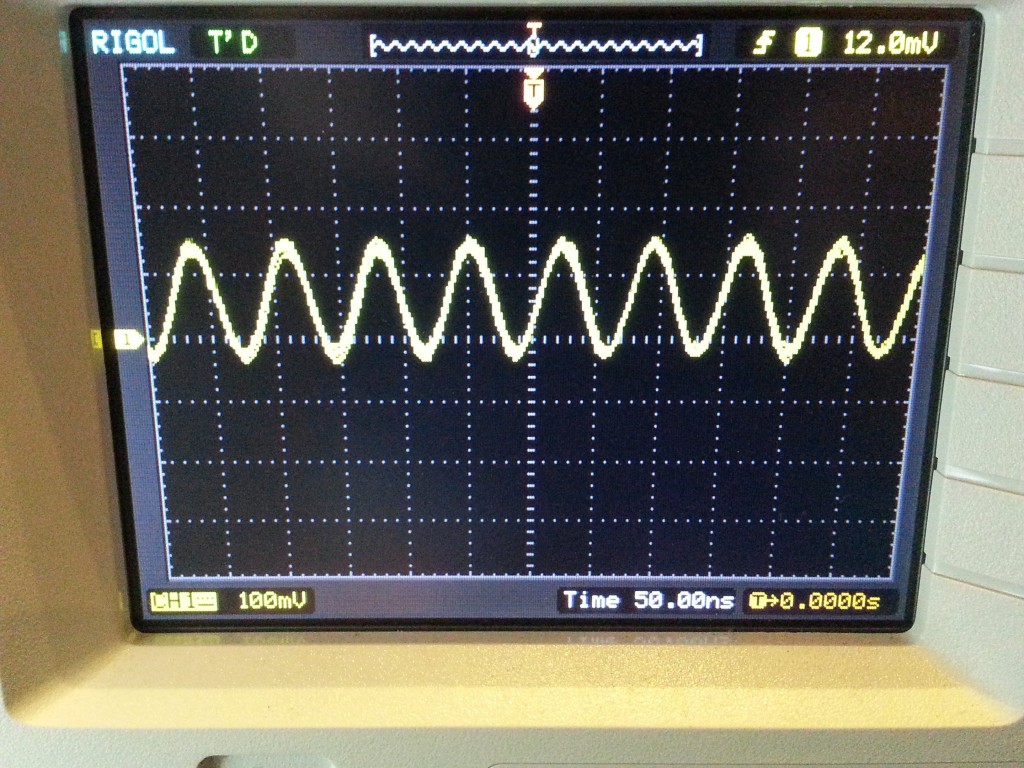
Recently some very cheap boards ($4-6) have been coming out of china containing a chip known as the AD9850 which is a Direct Digital Synthesis sine wave generator.

ad9850-dds

With only 4 control wires we can control the board via the arduino. This gives us a variable sine wave generator that we can control to give us a very nice sine wave from 0 Megahertz up to around 40 Megahertz at almost a full volt peak to peak.

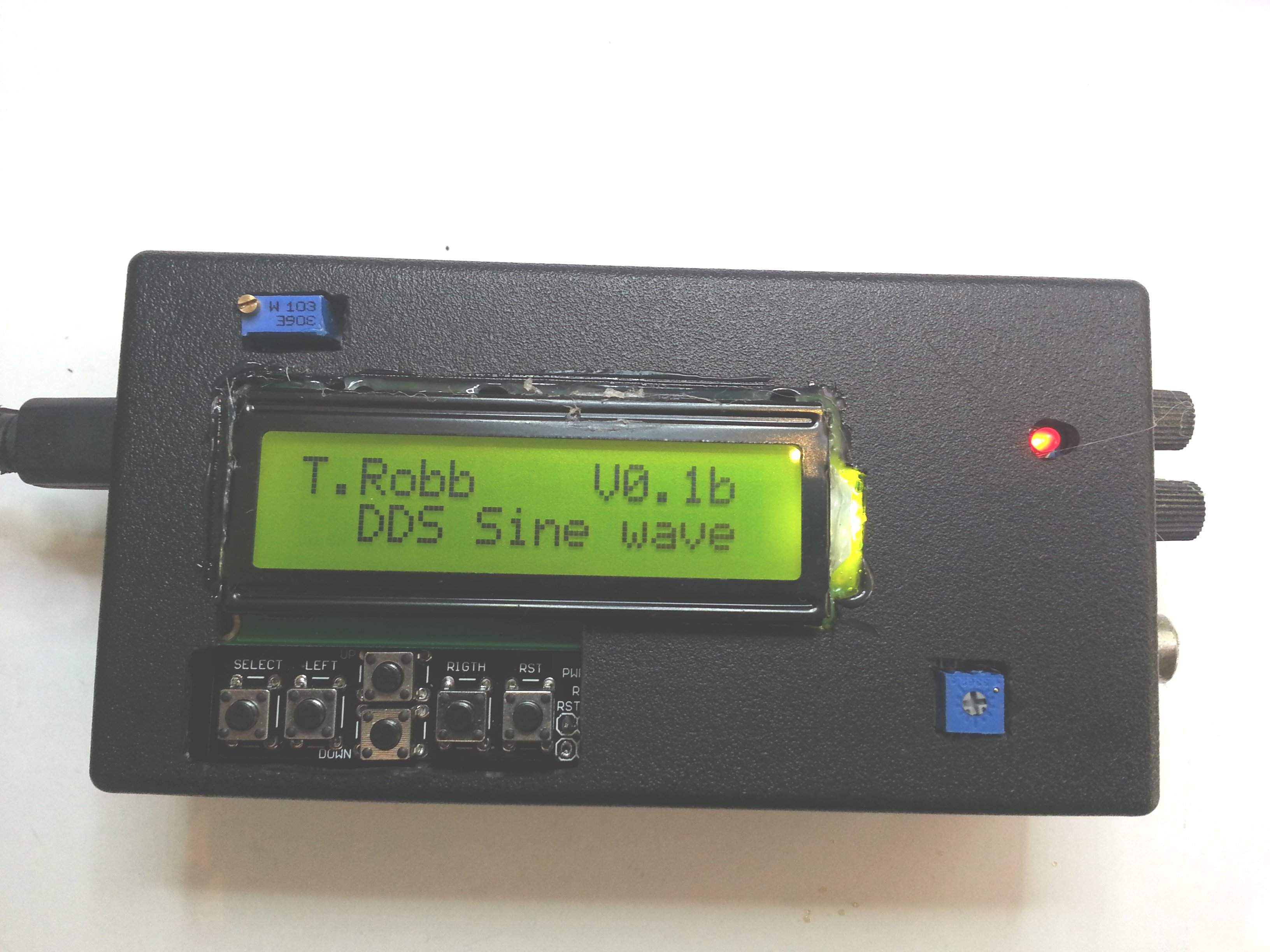
I decided to use an LCD keypad to give some on screen visual indication of the frequency plus a means of controlling the frequency quickly and easily.

2013-08-12 17.28.16

The code to upload to the Arduino, can be relatively straight forward.

I have been using libraries to simplify the toggling of the control pins to set the frequency on the sub board. Also cause i’m not that smart yet! The dds.h library is from Anthony Good - K3NG

So simple to use, the command to set the frequency is simply;

ddschip.setfrequency(Frequency);

Could it be any easier?

To get the board up and running, find Anthony’s library here.

Place the DDS directory in your arduino sketches/library folder with all the other libraries. That way when you compile/upload the IDE will find the file automatically.

The board has a clock pin, a load pin, a data pin and a reset pin. The other 4 pins of use are the sin wave ououtput and a square wave output.

2013-08-12 17.27.27


2013-08-12 17.27.13

In the setup code you will just need to define what pins you have used for what job between the DDS board and the Arduino.

#define data_pin 12
#define load_pin A5
#define clock_pin A4
#define clock_hz 120000000LL

dds ddschip(DDS9850, data_pin, load_pin, clock_pin, clock_hz);

2013-08-12 17.36.53

This sets my dds up with its 120mhz onboard crystal. I am substituting the pin numbers with words to make it easier to understand. For example the word data_pin would be replaced everywhere it is found at compile time with the number 12. this is what the #define command does
Now the chip pins have been defined, we can just use the ddschip.setfrequency(Frequency); command to set the frequency to any frequency we desire, within the capabilities of the device. The AD9850 boards i have used are pretty good for about 0-40mhz, beyond that they are a little sketchy.

2013-08-12 17.29.36

2013-08-18 12.52.22

I figured that i would use the up and down buttons to raise or lower the frequency.

I decide to use the left and right buttons to cycle the amount the frequency would increment on raising or lowering. I chose, 1Hz, 10Hz, 100Hz, 1KHz, 10KHz, 100KHz and 1MHz.

I cobbled together some code, some of which i hacked out of a previous LCD keypad project (Morse coder). I have kept the interface reasonably simple, after all we only have 16 characters on two lines.

2013-08-12 17.39.58

2013-08-12 17.40.17

After I had it built up on the bench and had tested it extensively I decide to put it all in a box. Initially i wanted to put a battery pack inside the box as well, but decided to leave access to the power jack so i could just plug in a battery pack externally if i wanted to. The result are the photos you see here. The LCD keypad shield is designed to be used in the open and not really designed to go in a case, but i shoehorned it in with lots of cutting. I used a terminal block on the side for the sine wave output and I also decided to break out the square wave output and its associated adjustment pot, the LCD contrast adjustment pot and the DDS board power light.

Here is the code I came up with;

/* T Robb 22.7.13

the way it works , is we read the buttons for up and down, we use that to increment or decrement a number which we later
use to set an increment or decrement amount, ie 10hz, 1khz, 1mhz etc
then if the left or right buttons are pushed we go up or down in frequency byt the incrment amount

*/


#include <stdio.h>
#include <dds.h>
#include <LiquidCrystal.h>

#define RESET 13
#define data_pin 12
#define load_pin A5
#define clock_pin A4
#define clock_hz 120000000LL
#define calibrationValue -0.0400000 // this is a value we change to calibrate our particular chip more accurately
#define buttonPin A0

// chip, data_pin, load_pin, clock_pin, clock_hz
dds ddschip(DDS9850, data_pin, load_pin, clock_pin, clock_hz); // set my dds up with 120mhz onboard crystal
LiquidCrystal lcd(8, 9, 4, 5, 6, 7);

// some variables to use in our program
long toFrequency = 14070000;
long currentFrequency;
long maxFrequency = 40000000;
long minFrequency = 0;
int incrementNumber = 6;
int maxprogramnumber = 6; // dont forget to increase the menu numbers here!!
int programnumber = 1;

void setup()

{
Serial.begin(9600);
Serial.println(“Beginning Setup”);
// set up the LCD’s number of columns and rows:
lcd.begin(16, 2);
lcd.clear();
lcd.setCursor(0, 0);
lcd.print(“T.Robb V0.1b “); //Print a little message
lcd.setCursor(0, 1);
lcd.print(” DDS Sine wave “);
delay(2000);
// setup pins
pinMode(RESET, OUTPUT);
pinMode(data_pin, OUTPUT);
pinMode(load_pin, OUTPUT);
pinMode(clock_pin, OUTPUT);
pinMode(buttonPin, INPUT);
digitalWrite(buttonPin, HIGH);

ddschip.calibrate(calibrationValue); // this is a value we change to calibrate our particular chip more accurately
ddschip.setfrequency(toFrequency);
lcd.clear();

}

void loop()
{
if(toFrequency >= maxFrequency){(toFrequency = maxFrequency);}
if(toFrequency <= minFrequency){(toFrequency = minFrequency);}
ddschip.setfrequency(toFrequency);
currentFrequency = toFrequency;

switch(incrementNumber){

case 0:
Serial.println(“increment amount is 1hz”);
lcd.setCursor(0, 0);
lcd.print(“Change By 1hz”);
break;

case 1:
Serial.println(“increment amount is 10hz”);
lcd.setCursor(0, 0);
lcd.print(“Change By 10hz “);
break;

case 2:
Serial.println(“increment amount is 100hz”);
lcd.setCursor(0, 0);
lcd.print(“Change By 100hz “);
break;

case 3:
Serial.println(“increment amount is 1 000hz”);
lcd.setCursor(0, 0);
lcd.print(“Change By 1khz”);
break;

case 4:
Serial.println(“increment amount is 10 000hz”);
lcd.setCursor(0, 0);
lcd.print(“Change By 10khz”);
break;

case 5:
Serial.println(“increment amount is 100 000hz”);
lcd.setCursor(0, 0);
lcd.print(“Change By 100khz”);
break;

case 6:
Serial.println(“increment amount is 1 000 000hz”);
lcd.setCursor(0, 0);
lcd.print(“Change By 1Mhz”);
break;

default:
Serial.println(“increment amount is 100hz”);
lcd.setCursor(0, 0);
lcd.print(“Change By 100hz “);
break;
}

lcd.setCursor(0, 1);
lcd.print(“Freq is “); //Print to lcd
lcd.setCursor(8, 1);
lcd.print(currentFrequency);

Serial.println(incrementNumber); // temporary for debuggin delete me

Serial.print(“Current Frequency is set to :”);
Serial.println(currentFrequency);

while((analogRead(buttonPin))>=1000){} // do nothing while no buttons pressed to chill out
delay(5);
if(analogRead(buttonPin)>=100 && analogRead(buttonPin)<=200){ // we have pushed up
upFrequency();
delay(300);
}

if(analogRead(buttonPin)>=200 && analogRead(buttonPin)<=400){ // we have pushed down
downFrequency();
delay(300);
}

if((analogRead(buttonPin))<=50){ // we have pushed right
incrementNumber++;
delay(300);
}

if(analogRead(buttonPin)>=400 && analogRead(buttonPin)<=600){ // we have pushed left
incrementNumber-;
delay(300);
}

if(incrementNumber > 6){incrementNumber = 0;} // this is where the menu goes around and around
if(incrementNumber < 0){incrementNumber = 6;}

delay(100);
lcd.clear();

}
void upFrequency()
{
Serial.println(“Going UP Frequency”);
switch(incrementNumber){

case 0:
toFrequency = (toFrequency + 1);
break;

case 1:
toFrequency = (toFrequency + 10);
break;

case 2:
toFrequency = (toFrequency + 100);
break;

case 3:
toFrequency = (toFrequency + 1000);
break;

case 4:
toFrequency = (toFrequency + 10000);
break;

case 5:
toFrequency = (toFrequency + 100000);
break;
case 6:
toFrequency = (toFrequency + 1000000);
break;

default:
toFrequency = (toFrequency + 10);
break;
}

}
void downFrequency()
{

Serial.println(“Going DOWN Frequency”);
switch(incrementNumber){

case 0:
toFrequency = (toFrequency - 1);
break;

case 1:
toFrequency = (toFrequency - 10);
break;

case 2:
toFrequency = (toFrequency - 100);
break;

case 3:
toFrequency = (toFrequency - 1000);
break;

case 4:
toFrequency = (toFrequency - 10000);
break;

case 5:
toFrequency = (toFrequency - 100000);
break;

case 6:
toFrequency = (toFrequency - 1000000);
break;

default:
toFrequency = (toFrequency - 10);
break;
}
}


Arduino Basics

Getting started with an Arduino

I thought I would write a little bit of a blog about the arduino and how to use it for simple tasks. The arduino is very simple 5 volt microcontroller with a very simple programming environment. The best part about the arduino has to be its programming environment, what they call the integrated development environment, or IDE for short. It also has a very simple plain English structure to its commands. Install the IDE here.

Arduino UNO

Here’s an example of some code.

void loop{

digitalWrite(13, HIGH); // Send 5 volts to pin 13

delay(1000);

digitalWrite(13, LOW); // Send 0 volts to pin 13

delay(1000);

}

To follow along it might be nice to have the arduino reference page up in your browser along side this article. http://arduino.cc/en/Reference/HomePage

Within the IDE in the menus at the top you will find a bunch of examples, how cool is that. There is also a link to the reference page.

Now the thought of writing programming,

for a lot of people sounds way too complicated and a bit beyond what they would like to learn. This is where the arduino has made its mark. First of all it comes with a very simple, easy to install, and easy to use editor. The editor has a menu that includes examples as well as a reference library explaining each command and how to use. The board itself is an amazing piece of hardware based around a very simple microcontroller chip that’s easily replaceable but with the right software it’s incredibly simple to automate tasks and to connect to an amazing array of other hardware.

So lets get started.

Most programming involves the inputting and outputting of information, switch positions, sensor values etc. For example we need to read if a switch is in a given state, we may then decide to turn on a light. So how should we store this information? In variables types such as integers, floats and booleans. Dont worry about the lingo, it will start to make sense after a while. Integers are whole numbers like 42 or 327, float is a decimal type like 3.14159, while boolean can only exist as either TRUE or FALSE. Char is another type which holds characters like the letter T.

Ok so now we have some data types, we need to tell the program about them, give them a name and then think about getting data in and out of these values. Here is an example of “Declaring” an integer;

int x = 42;

we are declaring the variable x as an integer equal to 42. Now we shall put variables aside for later and take a look at some other ways of deciding things and driving pins.

How about this,

void loop{

digitalWrite(13, HIGH);

delay(1000);

digitalWrite(13, LOW);

delay(1000);

}

Can you hazard a guess as to what it does? You may have noticed the word loop and the {} parentheses at the start and finish, everything inside these parenthese will be executed in order then repeated forever. You may have noticed the command

delay(1000);

All commands end with a semi colon. Delay pauses in milliseconds in this case 1000 which is one second. The rest you should know by now, Turning pin 13 ON, delaying a sec, then turning OFF, then looping around over and over. A blinking light is what we have created.

Now to think about getting data into and out of our micro via the hardware pins so we can actually do some useful work instead of faffing about in software.

Lets look at the following programming statement.

if(digitalRead(pin4)=HIGH){

digitalWrite(pin6, HIGH)

}

You may have already gleaned some information here, you may not. In plain english we can see at least three things, IF, Read, and Write.

The IF command will execute everything that is inside the {} parentheses block whenever the term or equation or whatever is inside the () brackets is either true, equal to 1, or HIGH.. For example;

if(1){

Serial.print(“Hello World”)

}

Would always print “Hello World” to the serial port, whereas;

if(0){

Serial.print(“Hello World”)

}

would skip the parentheses block.

You can open up the serial monitor in arduino, by heading up to the tools menu. Remember to use the serial port, you must first initialize it with the Serial.begin(9600); command.

So, going back to the example;

if(digitalRead(pin4)=HIGH){

digitalWrite(pin6, HIGH)

}

The command digitalRead(pin); returns a HIGH or a 1 if there is 5 volts on the pin number specified.

The code asks IF pin 4 reads HIGH, ie it has 5 volts on it, then digitalWrite 5 volts or a HIGH to pin 6.

So we can connect a button from 5 volts to pin 4 and an LED with a resistor from pin 6 to ground. When we flick the switch the LED will light up. Sounds simple and of course it is.

So now we can read and write to the digital pins, well done.

Straight away we can make all sorts of things, push button operated relays, (morse key?), light chasers and flashers, how about a movement activated light? PIR’s on ebay are about $5 and only need 5v and ground which the arduino can supply, and will output 5volts when triggered, too easy! I have built a board around this.. http://www.tobyrobb.com/shop/index.php?act=viewProd&productId=6&ccSID8643dd60547e611052421a6659ed64d2=cdf37eff4c45604703c8ed7da0d483e1

Now that we have digital coding under our belts, lets have a look at analogue coding. This is going to be quite easy actually, here are the two main commands;

analogRead(pin);

analogWrite(pin);

You’ll notice that the second word in a command is capitalized, that’s so its easy to read the command as two distinct words.

Now in the last example the output of digitalRead() would only return a 1 or a 0, which is all that digitalRead can return.

analogRead is different in that it can return a value, from 0-1023. That’s an integer. if there is exactly zero volts on the pin, we will get back a value of 0, whereas 5 volts would return 1023. 2.5 volts would be 512 and so on, do you get the picture?

To read higher values than 5 volts, we use 2 resistors as a resistor divider.

Now how can we store this value from the analogRead function?

how about this statement;

x = analogRead(A0);

We are reading pin A0 and putting the value into the variable x.

We could do this;

void loop(){

x = analogRead(A0);

Serial.print(x);

}

or this;

Serial.print(analogRead(A0));

both forms would print the results of pin A0, but the first would store it in a variable called x, which we could use later if we wanted too.

How about a simple 0 to 5 voltmeter;

Serial.print(“The voltage on Analog Pin 0 is : ”);

Serial.println(analogRead(A0)/205);

Notice i am dividing the result of the analogRead by 205, to change the value to volts, ie. 1023/205 equals 5 volts or 512/205=2.5 volts.

Another example;

void setup(){

int x = 0;

}

void loop(){

x = analogRead(A0);

if(x>=512){

digitalWrite(13, HIGH);

}

}

If theres more than 2.5 volts on pin A0, then turn on pin 13. When hooked to an LDR or a thermistor we would now have a darkness or temperature activated pin..

While it is light, the LDR is a fairly low resistance, and it pulls the pin down towards zero volts which will not pass our IF statement. As it gets dark, the LDR becomes very high resistance, and the 5v can pass through the 10k resistor raising the voltage on the analog input pin. You may have to fiddle with the values in the code to get the right triggering value, but this is the beauty of using code, you wont need to change the resistors, and you can use the earlier example code to print out the value of the pin so you get an idea of what values you can expect from your sensors.

Well i hope that analogRead wasn’t to hard to understand, just give it a pin number and assign it to a variable with the equals command, or use it directly inside another command.

Now for analogWrite.

Im sure your already guessing what it does right? Yes it puts a voltage on the pin anywhere from 0 to 5 volts, depending on what you tell it. But its not from 0-1023, this time its from 0-255. So it needs to be told which pin to use, and a value. NOT every pin on the arduino can give out analog voltages, just the ones marked with PWM.

The command

analogWrite(10, 255);

Would put 5 volts on the pin, whilst

analogWrite(10, 127);

Would put an average of 2.5 volts on the pin.

Notice i said average. It’s not really a true 2.5 volts, it kinda cheats. It does this by turning the voltage off for half the time and on at 5 volts for half the time. It does this pretty quickly. Giving us an average of 2.5v.

This means that something like an LED, which cant be run on 2.5v and would be very hard to dim, can now be dimmed as its still getting its 5 volts, and will light up, but it is not on for as long as so will appear dimmer, the strobing happens so quickly the eye cannot perceive the flashes.

So thats the basics.

Get yourself an Arduino UNO board, don’t pay more than $15, try ebay worldwide, sort by price and give it a go!

Further experimenting..

There are a huge number of commands available in Arduino to make automating some tasks easier and to make programming quite easy. There are commands to drive servos, stepper motors, LCD’s , serial ports, speakers, LED matrices, even a $10, 0-30mhz@1Volt variable frequency sine wave DDS generator board, all extremely simply. To look at some different hardware, which you probably have in your junk box, try looking here.

Maybe your ready to remove the chip and put it on a breadboard…

There are many commands and many examples, don’t forget you can access the examples and the reference through the menus of the IDE.

This has been a basic walkthrough of some of the common commands, i urge you to try many of the others.

Here is one last example that should be easy to understand and to get you started with what you know already. Just copy and paste into the IDE.

/*

Make some morse with a relay

*/

int relayPin = 13; // This is the integer that tells us what pin the relay is connected to

int dit_time = 100; // This is the integer that tells us how long a DIT is

int dah_time = 300; // This is the integer that tells us how long a DAH is

int space = 100; // The time to wait in between beeps

int letter = 200; // The time to wait in between letters

// Begin setup

void setup(){

pinMode(relayPin, OUTPUT); // We don’t always have to , but lets tell the hardware we are using the relayPin as an OUTPUT

digitalWrite(relayPin, HIGH); // Lets turn off the relay at the start with a HIGH

// ie 5 volts, that’s how my particular relay works.
}
// Begin the main loop

void loop(){

// Just put the dit’s and dah’s in order here to say what you want to say in Morse add some // delays if you need them..

dah(); //we have made our own command really, look below and you’ll see it defined
dit(); // when we call it like a regular command, everything in the parentheses executes
dah();
dit();

delay(letter);

dah();
dah();
dit();
dah();

delay(2000); // lets wait afew seconds before going back to the start of the loop
}

// Below are functions, we can call them in the main loop to save us having to rewrite them each time

void dit(){

digitalWrite(relayPin, HIGH); // Make sure relay is OFF before we start
digitalWrite(relayPin,LOW); // A LOW or zero volts on the relayPin turns our relay ON
delay(dit_time); // wait the specified time
digitalWrite(relayPin, HIGH); // We better turn relay off now we are finished
delay(space); // wait before starting next part
}

void dah(){

digitalWrite(relayPin, HIGH); // Make sure relay is OFF before we start
digitalWrite(relayPin,LOW); // A LOW or zero volts on the relayPin turns our relay ON
delay(dah_time); // wait the specified time
digitalWrite(relayPin, HIGH); // We better turn relay off now we are finished
delay(space); // wait before starting next part

}


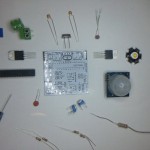
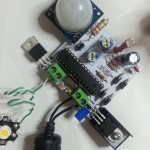
Night Light Sensor widget

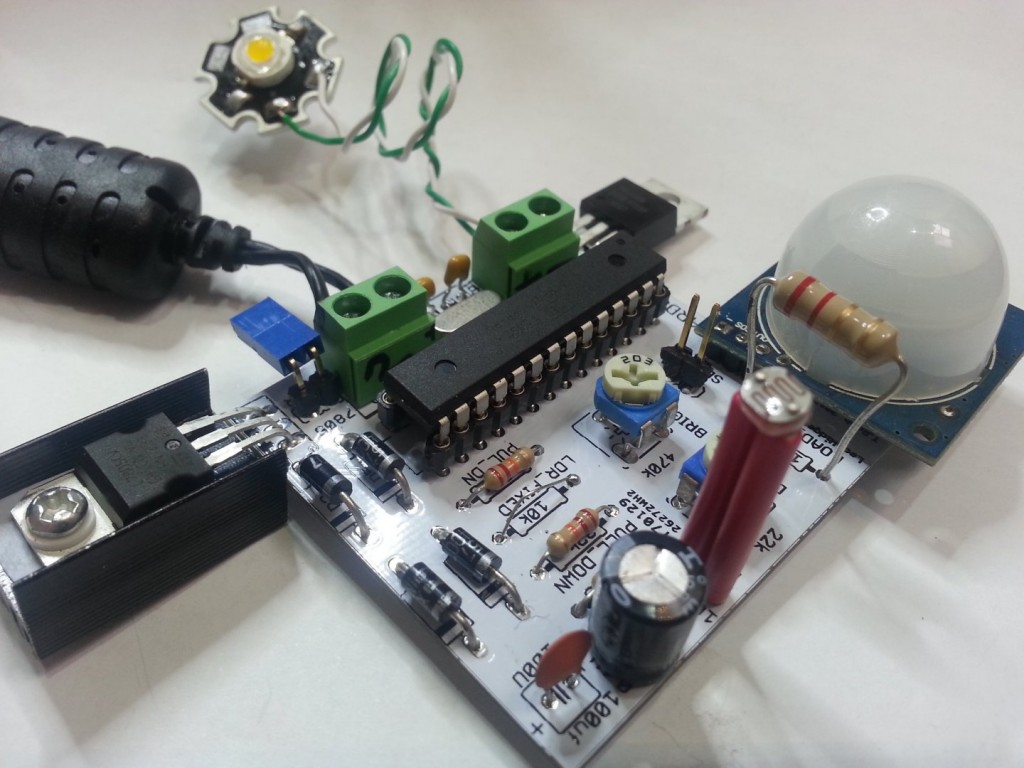
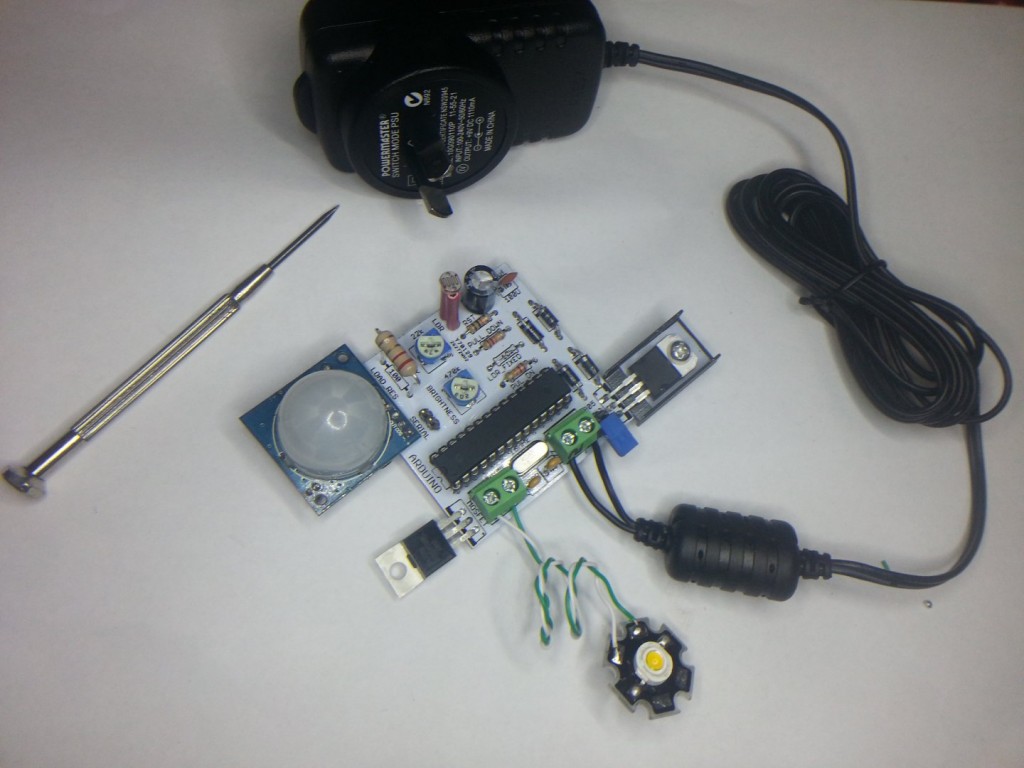
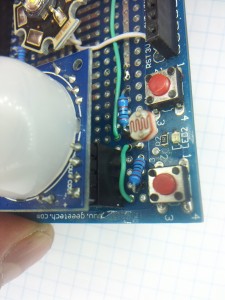
Over the last few months I have been putting some effort into prototyping my first printed circuit board. For me the process went better than I could have expected.

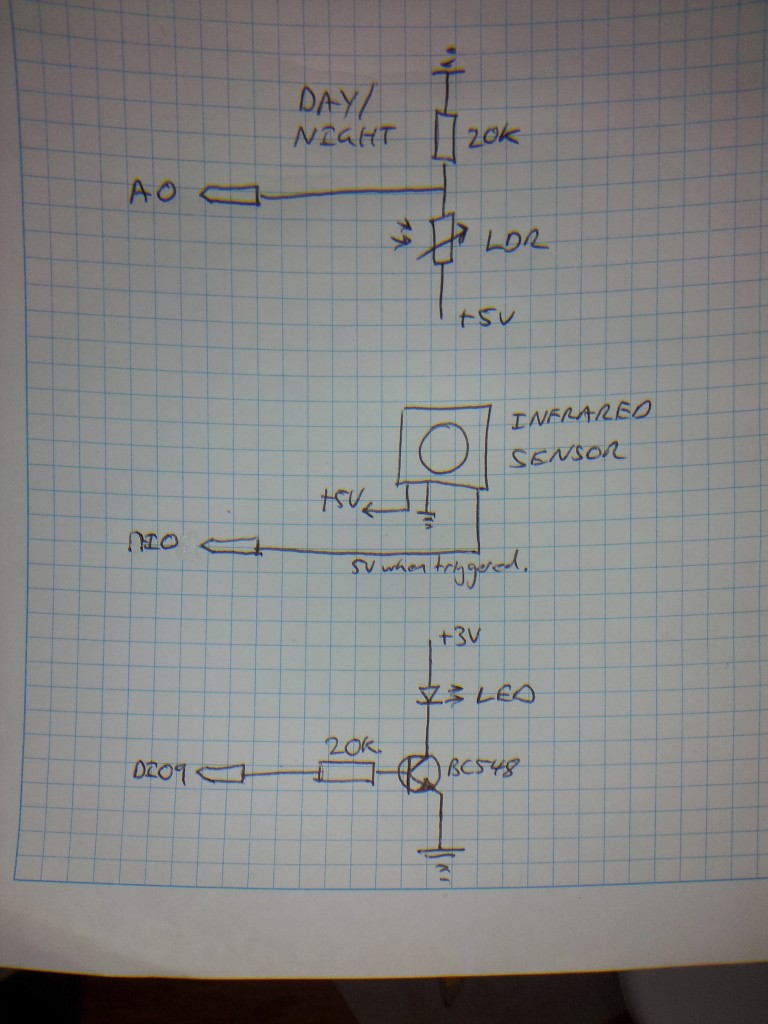
For me it really started when I built my first day/night light. I used a light dependant resistor to determine if it was dark and if it was to then turn on an LED light.

I then went on to add a movement sensor. From there I built a multi channel lighting controller. With very small thin low voltage wires running all over the place, hot glued in spots to the walls and floors. I can’t tell you how nice it is to have automated lighting. It seems like such a simple thing to go over and turn on a light switch, but believe me after having an automated system, If I go somewhere else to another house or hotel I realize how luxurious and satisfying it is not to have to turn the switches on and off in order as I move from room to room.

So what started out as a simple test of coding and sensors and logic, has seen me refine the design iteration by iteration. Not really in terms of capability but more in the way the parts come together and the way it is used. In terms of the hardware I have gone from breadboard, to prototyping board and soldered parts, to a fully custom printed circuit board (PCB). In the way of usability I have gone from very messy blobs of electronics laying on the floor, to an encased multi channel box, but with wires everywhere, then to a single board per light solution, with onboard adjustable dials.

After hearing and watching Dave Jones from the (http://www.eevblog.com) talk about PCB layout and the possibility of getting my boards made for under $20 for 10 delivered to my door, I really want to have a go at it. Now the first time I tried using the program without watching some tutorials I wasn’t really able to achieve much. But then I decided to use Youtube to my advantage. Yes its not just for cute cat videos. rpcelectronics have a seriously good quick set of videos to follow along to with your own free copy of eagle cad.

Itead Studios is where you can get your self some great 2 layer coloured PCB’s. Just send them your exported files from eagle cad and they will send you your boards in about 4 weeks or so.

So what’s next:-

A change to the on/off jumper to allow for AC.
A new revision of the board, possibly smaller with some smaller surface mounted parts.
Some changes to labelling.
A reset button.
ICSP (In Circuit Serial Programming).
Clean up the code and make possible improvements.

And of course I am posting my code. I am not a programmer by any means.

/*
Day night IR sensor shield 11/08/12 Trobb

DEBUG VERSION!!!!

*/

#include <avr/wdt.h>

#define ldr A0 // LDR light sensor
#define ir A1 // IR movement sensor pin
#define timerPot A2 // Pin the timer potentiometer is connected to

#define watchdogPin 3 // Uncomment this line to have a pin blink to let us know the code is running

#define led 3 // Output for LED

#define gain 10 // the amount of gain to add to the timerPot 10 is a normal value
int luxVal = 500; // Value to trigger the low light condition
float timerValue; // A variable to hold the value of the delay on time
float timerDelay;


void setup() {

// initialize the IO.

// pinMode(watchdogPin, OUTPUT); // Uncomment this line to have a different pin blink to let us know the code is running

pinMode(led, OUTPUT);
pinMode(ir, INPUT);
pinMode(ldr, INPUT);
digitalWrite(led, LOW); // start with LED off

Serial.begin(9600);

wdt_reset(); //make sure we reset watchdog timer to prevent endless resetting

// Uncomment this section to have a pin blink to let us know the code is running
// blink some morse code OK

digitalWrite(watchdogPin, HIGH); // blink watchdog led
delay(500);
digitalWrite(watchdogPin, LOW);
delay(500);
digitalWrite(watchdogPin, HIGH); // blink watchdog led
delay(500);
digitalWrite(watchdogPin, LOW);
delay(500);
digitalWrite(watchdogPin, HIGH); // blink watchdog led
delay(500);
digitalWrite(watchdogPin, LOW);
delay(1500);
digitalWrite(watchdogPin, HIGH); // blink watchdog led
delay(500);
digitalWrite(watchdogPin, LOW);
delay(500);
digitalWrite(watchdogPin, HIGH); // blink watchdog led
delay(250);
digitalWrite(watchdogPin, LOW);
delay(500);
digitalWrite(watchdogPin, HIGH); // blink watchdog led
delay(500);
digitalWrite(watchdogPin, LOW);


Serial.println(“Setup complete”);
}

void loop() {

wdt_reset(); //make sure we reset watchdog timer to prevent endless resetting

// Lets print some debugging values to the console

Serial.print(“Current ldr reading is “);
Serial.println(analogRead(ldr));
Serial.print(“Current sensor value “);
Serial.println(digitalRead(ir));
Serial.print(“Current timer value is “);
Serial.println(analogRead(timerPot));

wdt_reset(); //make sure we reset watchdog timer to prevent endless resetting


// Now check for darkness or daylight and movement

// so long as its dark

while(analogRead(ldr)<=luxVal){

Serial.println(“Its dark”);

// and movement is detected
if(digitalRead(ir) == 1){
Serial.println(“Movement detected”);
digitalWrite(led, HIGH); // turn led on
Serial.println(“LED is ON”);

// now leave light on for a predetermined time

timerValue = analogRead(timerPot);
timerDelay = timerValue * (timerValue / gain); // times the value by itself divided by gain

Serial.println(timerDelay);

float i = timerDelay; // set timer variable
while(i >=0){
i -;
Serial.print(“Timing out “);
Serial.println(i);

wdt_reset(); //make sure we reset watchdog timer within the loop to prevent endless resetting
}
}

else{
Serial.println(“No movement”); // no movement detected so turn led off
digitalWrite(led, LOW); // turn led off
wdt_reset(); //make sure we reset watchdog timer to prevent endless resetting
}

}
// not dark enough yet

Serial.println(“still not dark enough”);

digitalWrite(led, LOW); // turn led off
wdt_reset(); //make sure we reset watchdog timer to prevent endless resetting
}

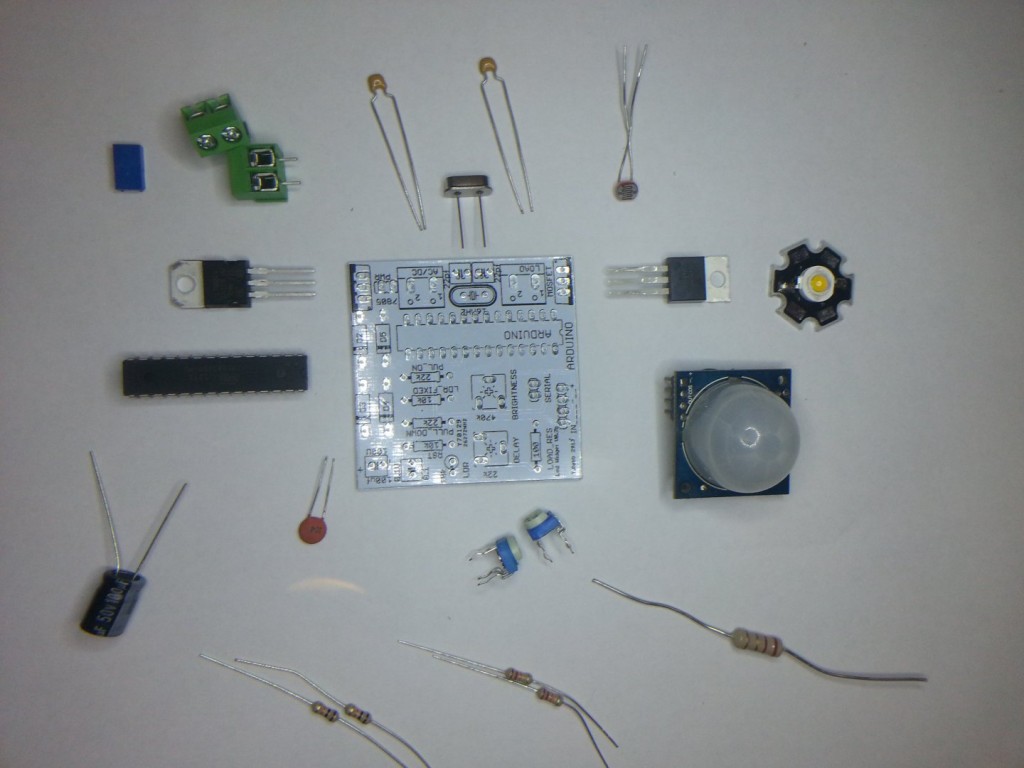
LED Night Sensor Widget Assembly Notes.

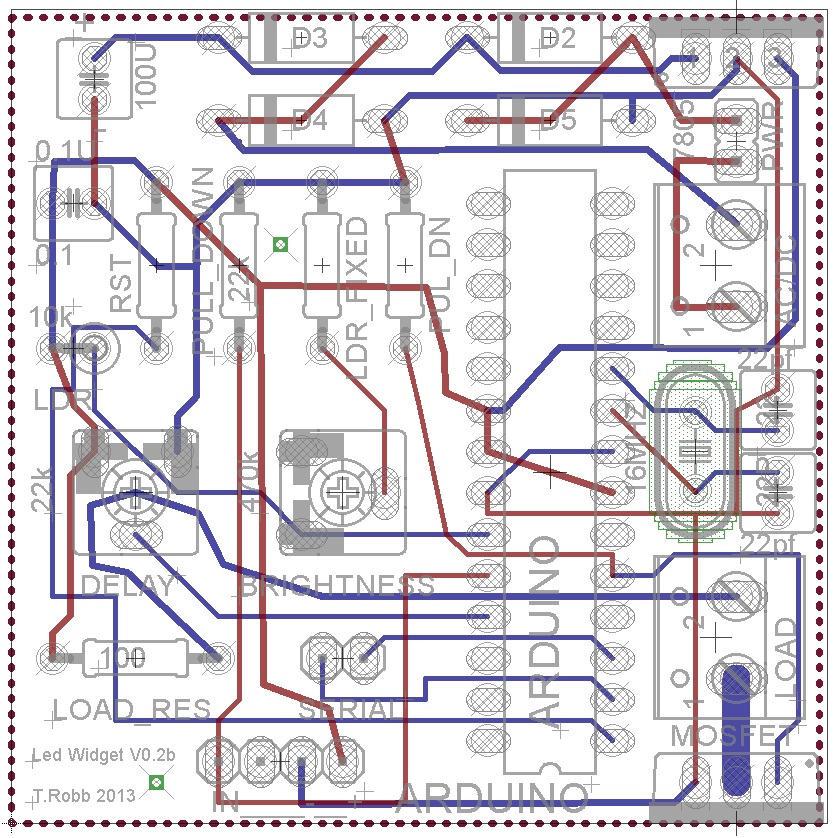
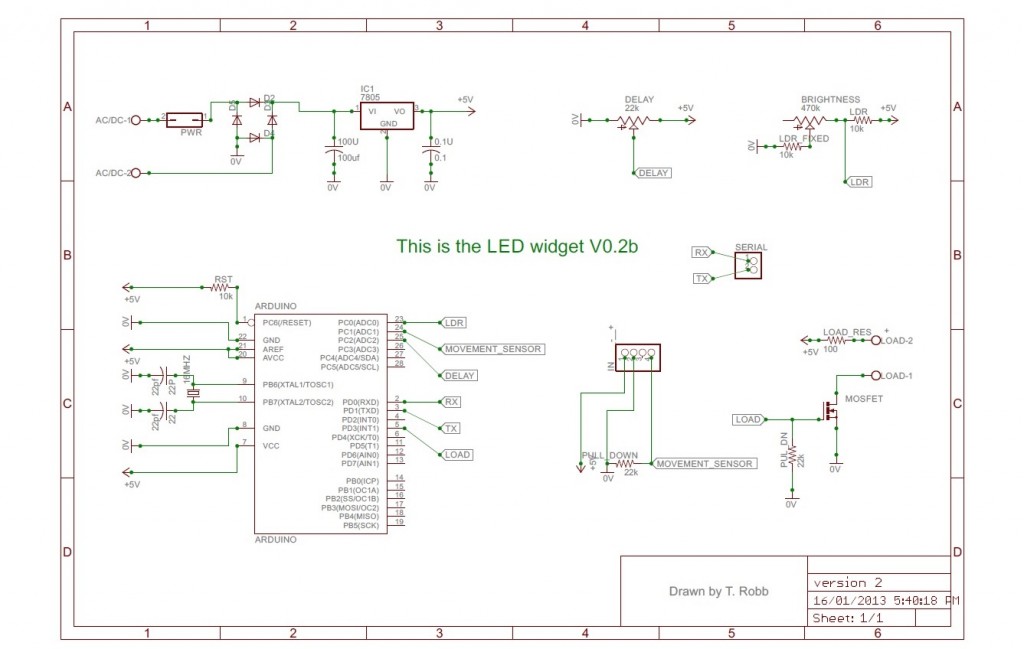
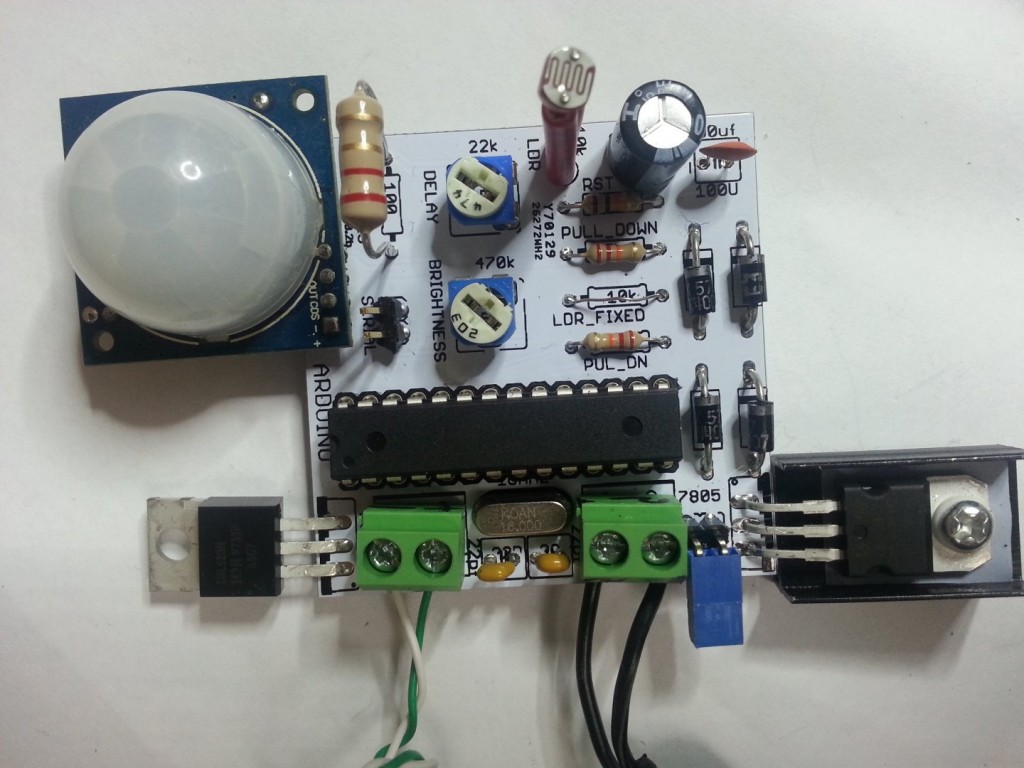
Toby Robb 2013

This board can be fed from either AC or DC 7-35 Volts. 7-9 volts DC is ideal as it generates less heat in the regulator.

With heatsinking the regulator can probably safely deliver up to 750mA.

The output at the terminals is 5 Volts. Calculate your LED load resistor accordingly.

With a 3 Watt led everything runs quite hot especially the load resistor, the regulator and the LED itself. So care must
be taken when siting the board to avoid anything catching fire. You have been warned!

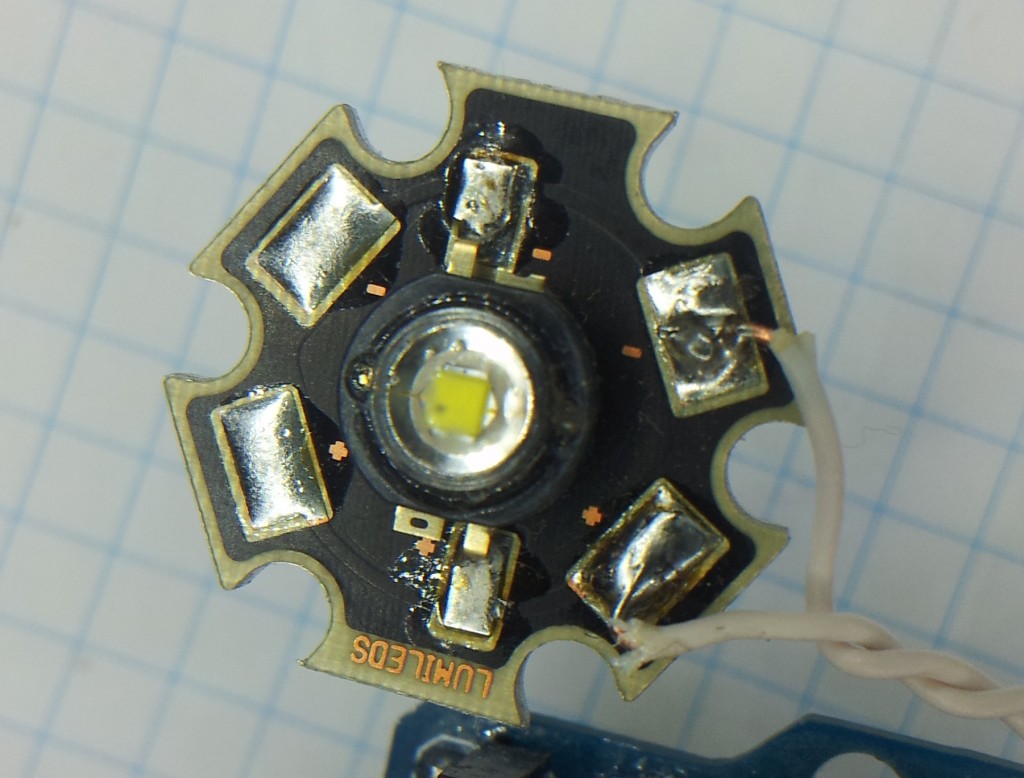
A 1 Watt led is ideal for this board.

There are a couple of mistakes in the board at the moment.

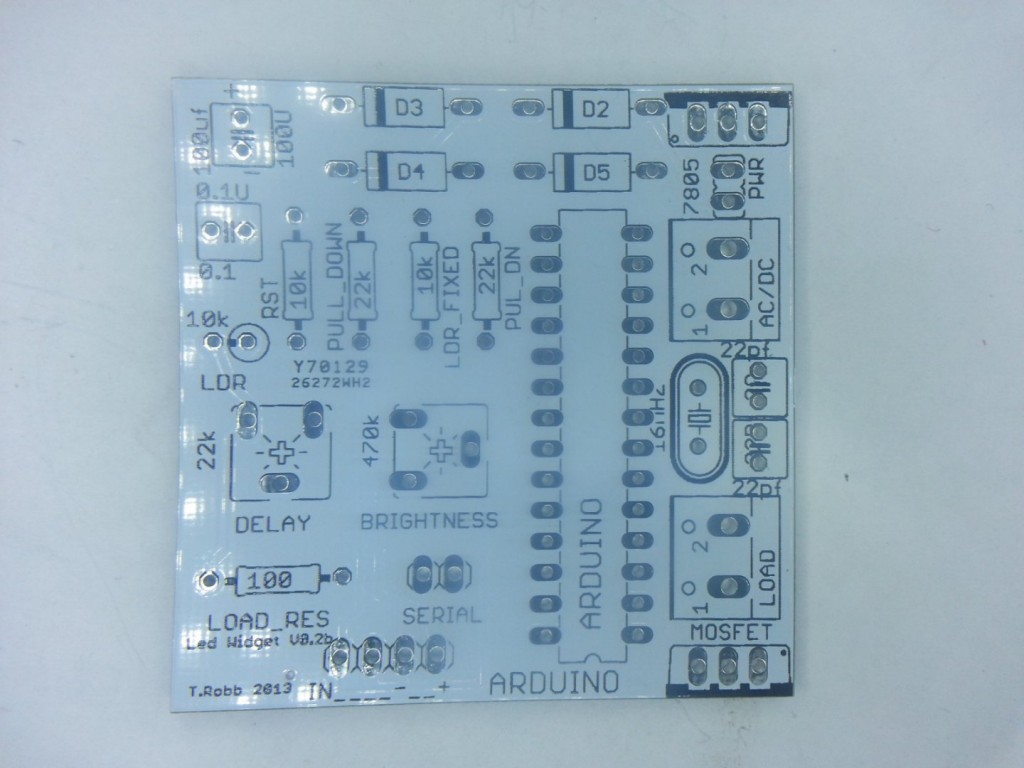
The 2 Power capacitors are marked incorrectly on the board. They need to swap positions.
The larger electrolytic should be on the DC regulated side.

The LDR fixed resistor should be a solid link.

Choose your load resistor to suit your LED. Keep the current below 750mA, or even lower if you can.

The values printed on the board for the brightness and delay potentiometers are marked
incorrectly on the board. They need to swap positions.
Note: The jumper will probably not cut the power if your using AC in. If you are using DC
the screw on the left should be positive and the jumper will work.

Known bugs: If you face the light back to into the LDR you may get oscillations.
The light will switch on and off a few times as it aproaches darkness. This needs a proper
fix in software.


Here below is a possible revision to the code I have been working on.
/*
Day night IR sensor shield 11/08/12 Trobb

Please enjoy my dodgy code!

I am not a programmer by any means!

Feel free to improve on it!

Check out http://www.tobyrobb.com

Written with Arduino IDE V.1.0.1

DEBUG VERSION!!!!

*/

#include <avr/wdt.h>

#define ldr A0 // LDR light sensor
#define ir A1 // IR movement sensor pin
#define timerPot A2 // Pin the timer potentiometer is connected to

#define watchdogPin 3 // Uncomment this line to have a pin blink to let us know the code is running

#define led 3 // Output for LED

#define gain 10 // the amount of gain to add to the timerPot 10 is a normal value
int luxVal = 150; // Value to trigger the low light condition
float timerValue; // A variable to hold the value of the delay on time
float timerDelay;
int dark = 0;
long previousMillis = 0; // will store last time LED was updated

// the follow variables is a long because the time, measured in miliseconds,
// will quickly become a bigger number than can be stored in an int.
long interval = 1000; // interval at which to check the LDR (milliseconds)


void setup() {

// initialize the IO.

// pinMode(watchdogPin, OUTPUT); // Uncomment this line to have a different pin blink to let us know the code is running

pinMode(led, OUTPUT);
pinMode(ir, INPUT);
pinMode(ldr, INPUT);
digitalWrite(led, LOW); // start with LED off

Serial.begin(9600);

wdt_reset(); //make sure we reset watchdog timer to prevent endless resetting

// Uncomment this section to have a pin blink to let us know the code is running
// blink some morse code OK

digitalWrite(watchdogPin, HIGH); // blink watchdog led
delay(500);
digitalWrite(watchdogPin, LOW);
delay(500);
digitalWrite(watchdogPin, HIGH); // blink watchdog led
delay(500);
digitalWrite(watchdogPin, LOW);
delay(500);
digitalWrite(watchdogPin, HIGH); // blink watchdog led
delay(500);
digitalWrite(watchdogPin, LOW);
delay(1500);
digitalWrite(watchdogPin, HIGH); // blink watchdog led
delay(500);
digitalWrite(watchdogPin, LOW);
delay(500);
digitalWrite(watchdogPin, HIGH); // blink watchdog led
delay(250);
digitalWrite(watchdogPin, LOW);
delay(500);
digitalWrite(watchdogPin, HIGH); // blink watchdog led
delay(500);
digitalWrite(watchdogPin, LOW);


Serial.println(“Setup complete”);
}

void loop() {

wdt_reset(); //make sure we reset watchdog timer to prevent endless resetting

// Lets print some debugging values to the console

Serial.print(“Current ldr reading is “);
Serial.println(analogRead(ldr));
Serial.print(“Current sensor value “);
Serial.println(digitalRead(ir));
Serial.print(“Current timer value is “);
Serial.println(analogRead(timerPot));
wdt_reset(); //make sure we reset watchdog timer to prevent endless resetting

// Now check for darkness or daylight and movement

checkLdr();

// so long as its dark

while(dark <=0){

Serial.println(“Its dark”);

// and movement is detected
if(digitalRead(ir) == 1){
Serial.println(“Movement detected”);
digitalWrite(led, HIGH); // turn led on
Serial.println(“LED is ON”);

// now leave light on for a predetermined time

timerValue = analogRead(timerPot);
timerDelay = timerValue * (timerValue / gain); // times the value by itself divided by gain

Serial.println(timerDelay);

float i = timerDelay; // set timer variable
while(i >=0){
i -;
Serial.print(“Timing out “);
Serial.println(i);
checkLdr();
if(dark<=0){
return;
}
wdt_reset(); //make sure we reset watchdog timer within the loop to prevent endless resetting
}
}

else{
Serial.println(“No movement”); // no movement detected so turn led off
digitalWrite(led, LOW); // turn led off
checkLdr();
wdt_reset(); //make sure we reset watchdog timer to prevent endless resetting
}

}
// not dark enough yet

Serial.println(“still not dark enough”);

digitalWrite(led, LOW); // turn led off
wdt_reset(); //make sure we reset watchdog timer to prevent endless resetting
}


void checkLdr(){

// check to see if it’s time to read the LDR;

// difference between the current time and last time

unsigned long currentMillis = millis();

if(currentMillis - previousMillis > interval) {
// save the last time you checked the LDR
previousMillis = currentMillis;

Serial.println(“Checking LDR”);

if(analogRead(ldr)>=luxVal){

dark++;

}
if(analogRead(ldr)<=luxVal){

dark-;

}
if(dark>=5){
dark = 5;

}
if(dark <=-5){
dark = -5;
}
}
Serial.print(“Current dark reading is “);
Serial.println(dark);
}

Different software approaches to the same hardware

Recently i have been trying to become better at writing microcontroller code.

So i built a small shield i can use to test various concepts in software. It has an LDR to sense light levels,a PIR movement detector and an LED.

Over the years as I have tried to learn to program, i have tried lots of different approaches to writing code that is robust and simple. If the code doesnt run properly it can leave the hardware needing a reboot or feeling glitchy.

Usually it starts with a bunch of sensors that i have, with some sort of output device like a relay.


I am by no means a very good programmer but i know enough to get myself into trouble. I know how to copy and modify others examples. I am always ready to have a go at it myself and write something from start to finish, even if i do make a mess of it.

I have read a book on programming once, it gave me two good tips; one was to write up an algorithm that described just what decision the program was expected to make and the flows of logic that derive from this. The second tip was to try to begin the coding by putting all the comment code in first. Re-describing with your comments the algorithm you previously came up with.

All good and well but how you treat the algorithim at the start makes a big impact on the way the software is written. For example;

Should i create a loop that reads a sensor then makes a decision whether to drive an output straight a way? only leaving the loop when predefined conditions are met? Meaning i can just sit there polling the sensor and wait for the event, while also unable to do anything else?

Or should i poll all of the sensors at some sort of refresh rate then make a decision based on which flags are set by the sensors? Using a lot of resources continuously but making sure i don’t miss anything and have all the data before i make a decision?

If its just one sensor and one output i would always write one loop to check the sensor then drive the output. the trouble comes when you want to expand. What i find is that the more sensors there are and the more detailed the decisions then the polling with flags makes more sense.

Now its the hardware making the early decisions in the software. Will there be special IC’s with there own protocols? like IC2, SPI and serial just to name a few. Some bits of gear I only want to use the library that i can get for it, because i can’t write the hard code to talk to it properly.

So i am going to try various software approaches to making a movement activated night light.


The various pictures are of my first go at the hardware and the listing given below is my attempt at a polling type program.

There is one delay used while waiting for dark. I have noticed that if I poll a day night sensor too quickly, then as darkness approaches the sensor will oscillate back and forth between dark and light making for some crazy switching of the output. I needed to write a routine that would take care of it. I guess the best way to go about it would be to sample the light and wait till another sample some time later shows a fall by a certain amount. But in this situation we cant do anything until its dark anyway so why not just put a short delay between looking at the light levels and switching the output, that stops the oscillation.

The trouble is, we cant do anything while delayed in the loop. This becomes a problem when we try to expand the program or want to check on the other sensors.


/*
Day night IR sensor shield 11/08/12 Trobb
*/
#include <avr/wdt.h>
wdt_reset(); //make sure we reset watchdog timer to prevent endless resetting

int ir = 8; // IR movement sensor pin
int ldr = A0; // LDR light sensor
int led = 9; // Output for LED light

void setup() {

// initialize the IO.

pinMode(led, OUTPUT);
pinMode(ir, INPUT);
pinMode(ldr, INPUT);

digitalWrite(led, LOW); // start with LED off
}

void loop() {

wdt_enable(WDTO_2S); // start a watchdog in case we crash!

digitalWrite(led, LOW); // keep LED off

if(analogRead(ldr)<=250 && digitalRead(ir)== 1){ // so long as its dark and movement is detected

digitalWrite(led, HIGH); // turn led on
}
wdt_reset(); // made it through the loop OK reset watchdog
}

Making displays

I’ve enjoyed making the displays I’ve needed. I’ve used lots of LED types, from one or 2 status LED’s to bar graphs and 7 segment LED’s.


They’re great for clocks or thermometers or volt/ammeters or anything really.

While LCD’s are great at scrolling output and displaying a number of text or number parameters.

It’s even possible to make a composite output from a microcontroller using only 2 resistors. Hook this up to a large LCD or an old CRT and you have a great retro display.


Which ever display I use I try to choose an interface with the lowest pincount possible. The software library also needs to be as easy to use as is practicable.