

For a long time I have been looking at the various 3d plastic printers, laser cutters and CNC machines that have become more affordable to the home builder. Of course I was never quite sure if investing in one of these machines would pay off and in fact be worth investing possibly a thousand dollars.
My main concern was whether I would be able to use the machine regularly and how hard would it be to use?
I could certainly think of many uses for it. Making a custom case for my electronics projects was the first thing i thought of. Then there is all the radio control and amateur radio projects. Finally there is the opportunity to make replacement items or repair things. Thingiverse had a great range of models and pictures, so I thought I would at least be able to get started with other peoples models.
Well the laser cutter was out of my price range. The CNC was probably a little big if a sheet cutter and maybe not as versatile as a 3D printer as a milling machine.
There are more 3D printers than you can poke a stick at, and more than a fair share of them have pitfalls. Everyone is on the band wagon, and that’s not necessarily a good thing.
The first printer I looked at seriously was the printrbot simple. 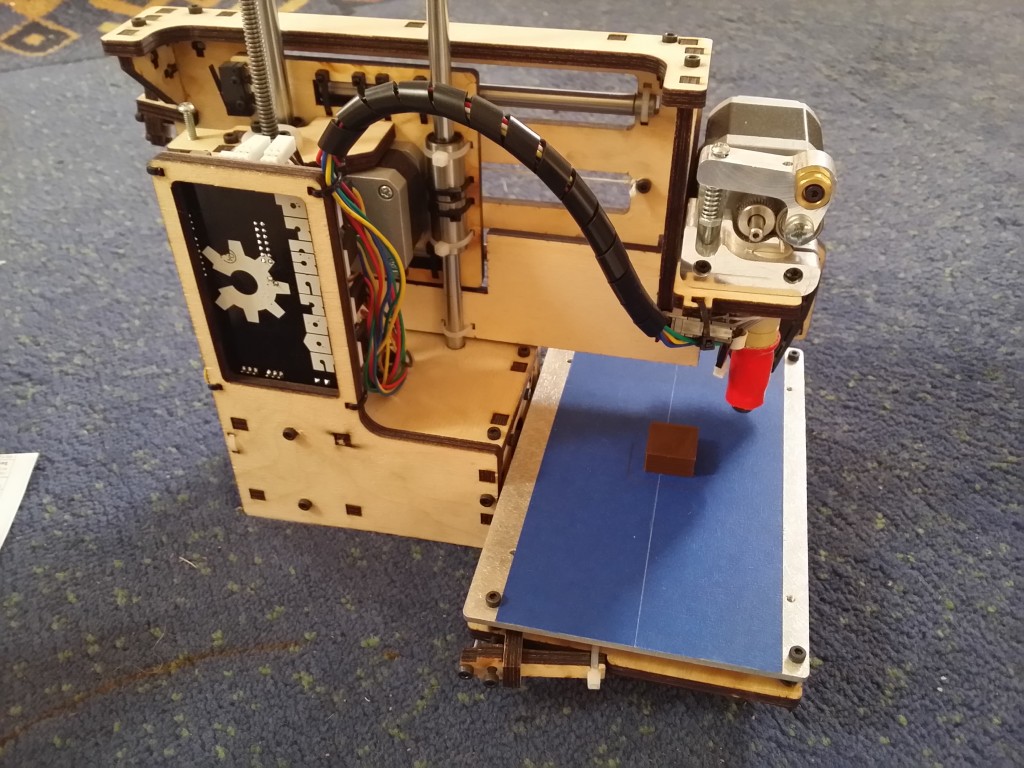 For around $350 this little printer looked the business. I saw a great interview with Brook Drumm on Hak5. It still seemed like a lot of money to spend on something I had never tried myself even though I had examined some prints at a maker faire in sydney and read a bit of stuff on the web. I had added it to the cart a few times postage, seemed a fair bit to Australia, around $80.
I was lured in by the makibox, which funded on kickstarter, successfully delivering product to its backers, and now had a website shop selling the printers. The price was $240 delivered! I figured the store was up, the community existed and all would be well. Turns out, I was wrong! The company, Jonathan Burford has taken the money and not supplied any printers to hundreds of people. He is refusing to refund those people as well. My first major loss on the internet! Oh well, I have hundreds of successful transactions on Ebay, so you lose some, you win most.
I took another look at the Printrbot website. They had an assembled and tested model with a few upgrades for the price of a regular model, for $400 delivered i decided to go ahead and get one, like I should have done in the first place.
It arrived pretty quickly and in good condition. Its only paperwork nudged me to go straight on the web and find the getting started guide. I was pretty excited so I downloaded the requisite software painlessly and tried to print. It had a calibration cube stuck to the bed when it arrived with a really great print on it, so i knew it could print well!
There seemed to be a lot of settings in the software that I wasn’t sure of, turns out It’s really not that hard.The main mistake i made initially was telling the slicing software that my printer was pretty big, and when i placed objects out at the edge of the printing platform, the poor real world little printer tried to go out there but couldn’t so it just piled up the plastic at its outer limit anyway. This was kinda funny, and because i was trying to print a square, in a corner, it just printed the half it could fit and just ran against its limits trying to deposit the other half, so still saw a square, but it was not looking too healthy. Anyway a little more reading and I set up the parameters of the printer bed, filament size and temperature as well as some of the printing method options, IE amount of internal filling and wether to print a raft base or support material.
On to thingiverse and the basics of printing. Repetier-Host, the printing client can accept most thingiverse models and can scale and rotate them for you and slice them up into g-code and send it off to the printer.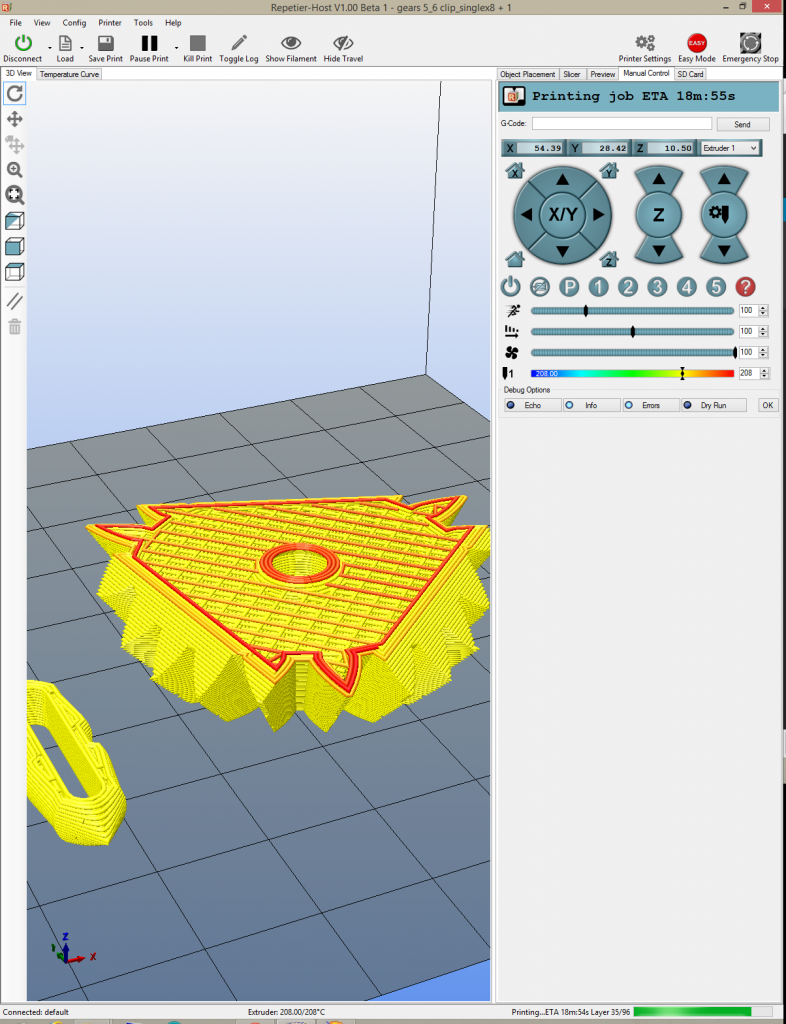
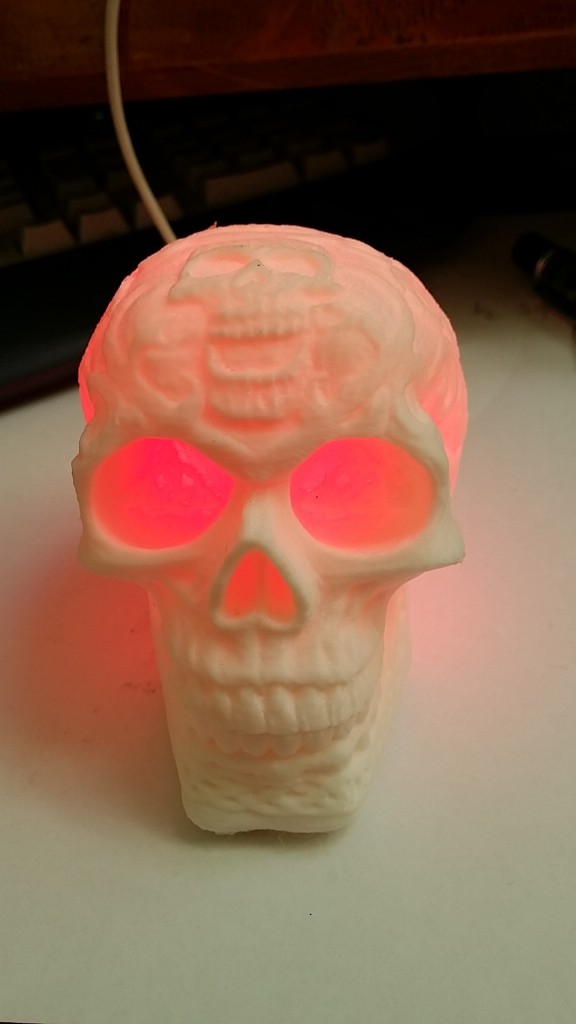
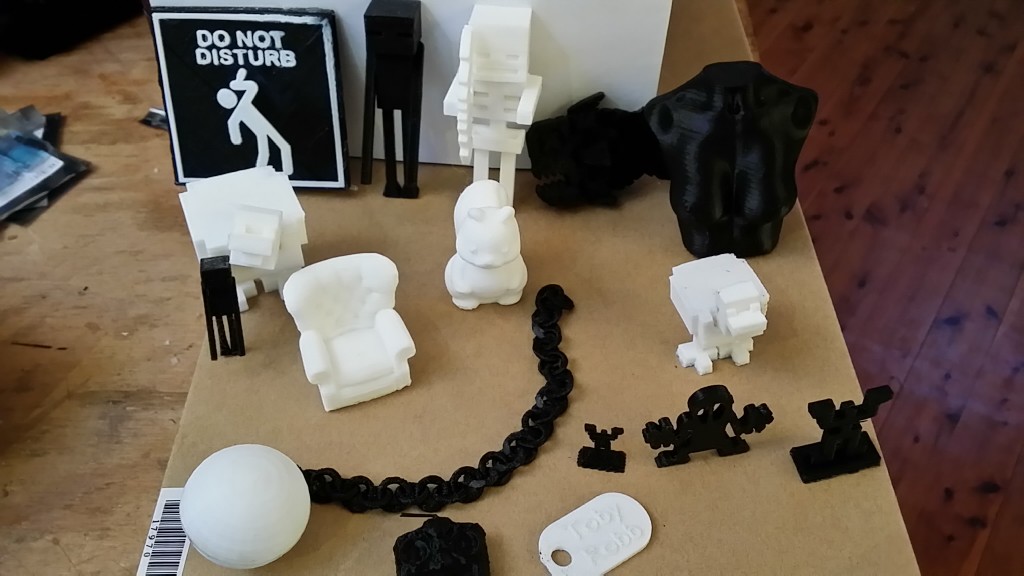
I have been printing lots of stuff, from minecraft and arty stuff to interesting things that showcase the capabilites of printing.
I then tried to make my own objects. Starting with sketchup, which i didn’t really like, to Blender, which is more the kind of model builder I played with many years ago.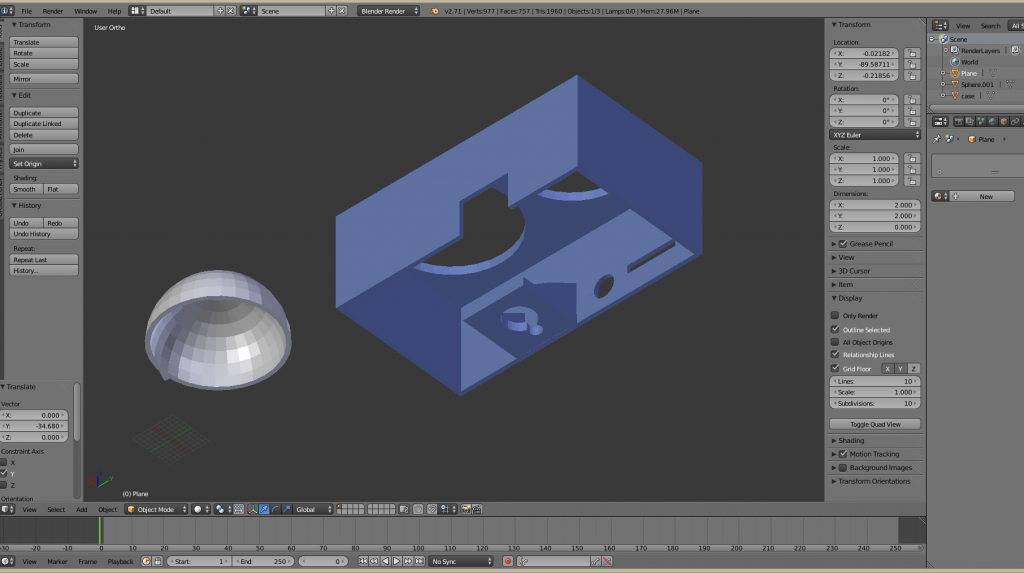
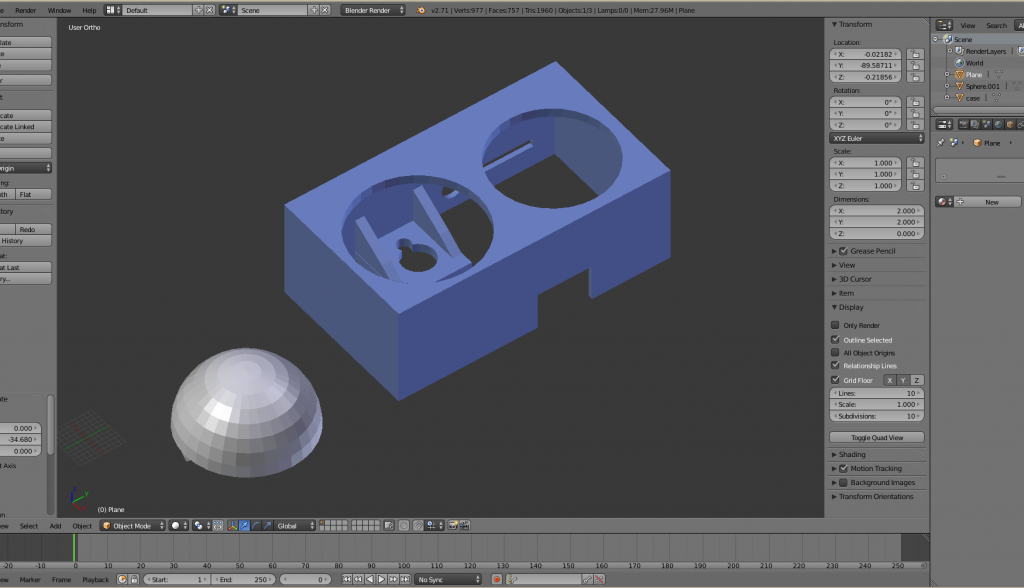
I have since made many revisions of objects that work with my electronics projects such as a led night sensor widget case. I even found you could use minecraft as a builder and print objects from it!
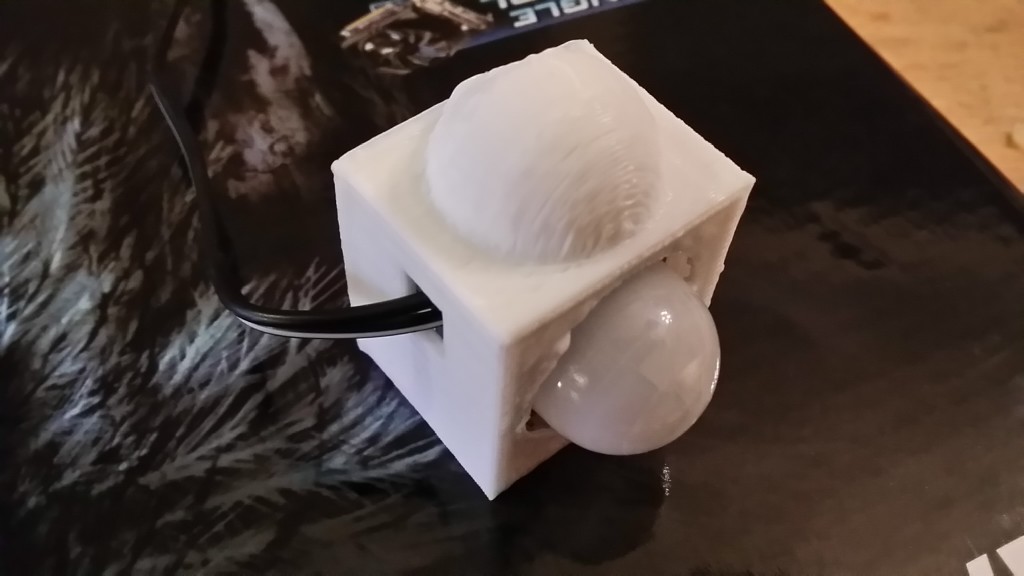
In short, I ‘m very glad I have forayed into 3d printing, and I have learned a valuable skill. I am now more aware of how things are packaged and will design more boards a little differently.


 `
`